


by James Mottram
Patience is a virtue, they say, as Hlynur Pálmason knows only too well. The Icelandic director has crafted Godland, a stern, fearless film about a 19th Century Danish priest of the Lutheran faith, who travels to a remote part of Iceland where he’s tasked with establishing a church. Framed in an austere manner – like a latter-day Ingmar Bergman – Pálmason filmed the craggy exteriors close to where he lives, on the southeast coast of Iceland. So far, so convenient.
Yet what really impresses is the sheer dedication to the cause – notably, one time-lapse shot of a dead horse that rots in the snow until it’s just a skeleton. Before long, the bones are disguised by the lush grass of the following summer. Remarkably, Pálmason spent two years, on and off, shooting the decaying equine which happened to be on land belonging to a neighbouring farmer – not even necessarily with the idea that he’d include it in the film.
“I think it’s just a big part of my process,” he explains. “Because I always have a 35mm camera in my car. And I’m always filming something every week, right? So, each time I drive to the horse, I think about the film, I put up the camera, and it becomes like a process of thinking. So I always do things like this while I’m writing. And it’s not always ending up in the film. But it helps me dive deeper into the material.”
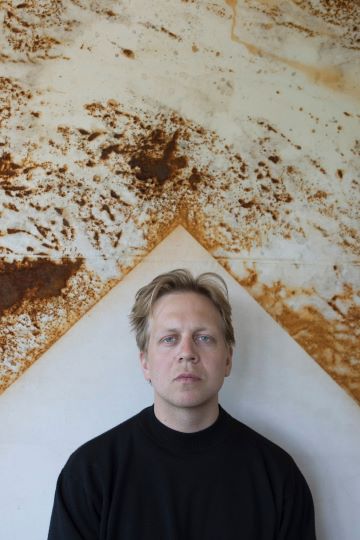 Pálmason first started etching out a script in 2014, and even before that, he was recording sounds on his phone for the film, such is his creative want. “That’s sort of [the case] with all my projects. They all run sort of parallel. And then I start shooting and try stuff and develop it and write in parallel. And then hopefully we get it financed.” When he finally raised the money, he shot the main block in just over two months, but the film wouldn’t be what it is without this exhaustive preparation.
When we meet Pálmason, it’s during the Cannes Film Festival, where Godland played in the Un Certain Regard strand. Critical reviews for the film were glowing. Certainly, it announces Pálmason as a major talent on the arthouse circuit, following his earlier films Winter Brothers (2017) and A White, White Day (2019) – which both looked at men boiling over with rage.
He’s fascinated with the reaction so far, how an international audience will take to it compared to those from either Iceland or Denmark. “I think with everything I do, I don’t think you get all of it. You shouldn’t. There are certain things you connect to and certain things you don’t and it’s sort of open for interpretation. So, nobody’s wrong or right. But I did feel that the Danes would watch it differently than the Icelanders and the international [crowd].”
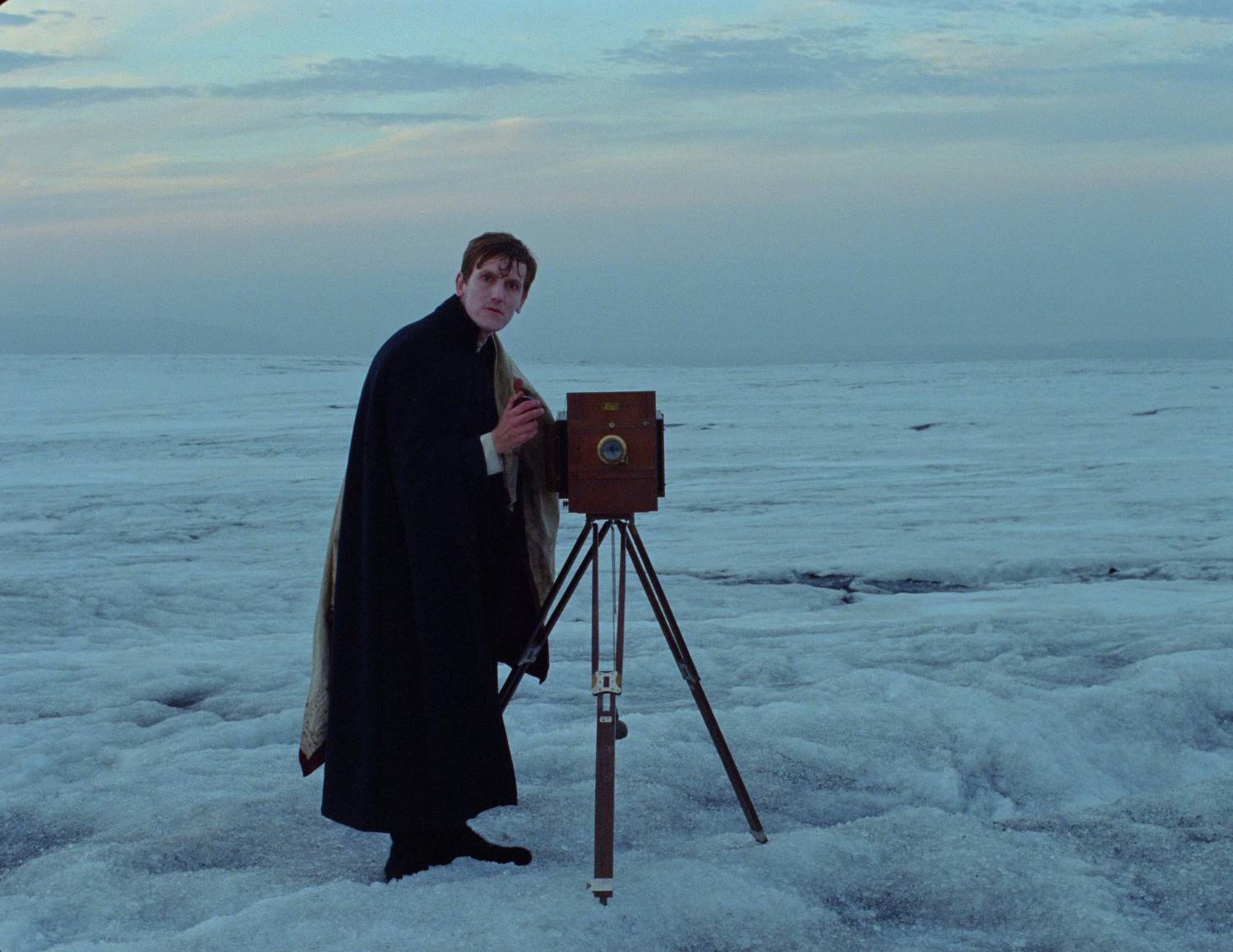
Methodical and moody, Godland sees the priest, Lucas (Elliott Crosset Hove), arrive in this inhospitable land, where he will eventually clash with Ragnar (Ingvar Sigurdsson), a local guide far more connected to Mother Nature. As the film states at the outset, the priest’s journey was documented via a collection of seven wet plates taken on a primitive camera. This, as it turns out, is fictional – not unlike the opening of Fargo, which stated that the grisly story was true. Still, unlike the Coen Brothers, Pálmason isn’t out to string us along.
“It is a fiction. Absolutely,” he confirms. “There are a lot of details in it that are taken from old traveling books or diaries. It’s inspired by both modern things and old things. And the story of the wet plate images, the seven images, is something that I made up for myself while I was writing.” It was an idea that fired his imagination. “Where were they taken? Of whom? Were they alone together? Or were they a group of people? We actually recreated seven photos in the film… we haven’t shown all of them, we’ve only shown one: the poster of the film.”
The film adopts the box-like 1.33.1 aspect ratio, echoing the photographs that Lucas takes of Iceland’s people and places. “If you think about it… during that time, probably, the church was in power in many ways. Like companies today. They had the money, they had the resources. I thought it was really interesting… this kind of modern priest almost, with his camera, probably has a lot of power, being both the priest – like a hand of God, someone working for God – and then being also someone that can record an image or make an image of you.”
Already, the film has drawn comparisons to Martin Scorsese’s Silence, with its tale of Jesuit priests arriving in Japan. Here, Pálmason compares Lucas to “an alien”, despite the relative proximity between Iceland and Denmark. “He is definitely foreign. And there’s a language barrier, and miscommunication and translation. And the languages… there’s a lot of chaos around that. He can speak to his translator, but he doesn’t understand anything else throughout the first part of the film.”
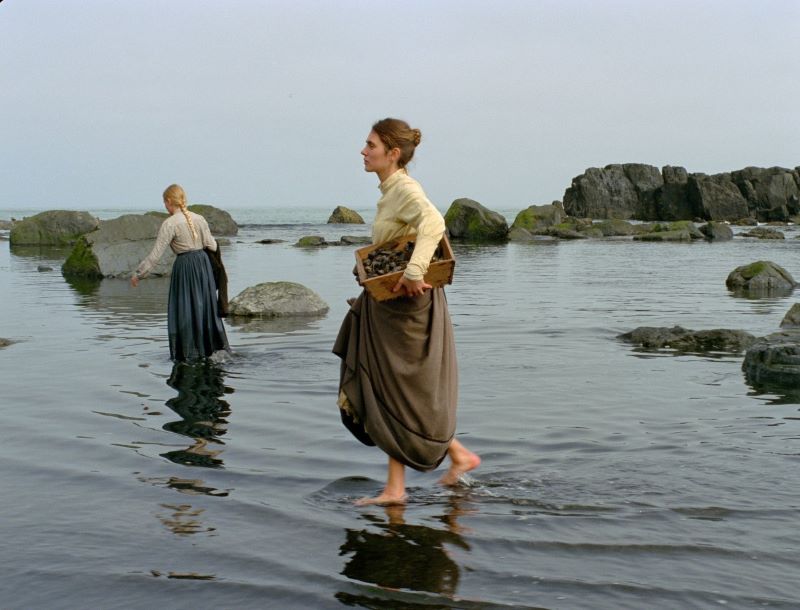
Working in tandem with his cinematographer Maria von Hausswolff, Pálmason also set out to capture the stark magnificence of the natural world – lending the film the feel of a Werner Herzog or Terrence Malick movie. Sometimes, it was a matter of chance, he says. “For example, there’s this beetle that runs under the forks [on a table] and knocks his head into one of the forks. There are things like that, gifts like that… or like a fly going into his eye when he wakes up. These are created by us, but still spontaneous.”
The way Pálmason puts it, he always writes for his locations. “When Lucas is completely drained, and it feels like they’re almost leaving him behind, that is shot in a very, very strange place which is like a swamp land. And there’s like nothing around, it’s completely alone. And during the summers, when it’s bright 24/7, it’s just this magical place because the birds wake up at a certain point. So, it’s completely still. And then suddenly, the whole area wakes up. And because I’ve experienced this before, I wrote it into the film.”
When we speak, Pálmason is uncertain exactly what he will make next, although there’s talk of another thematic trilogy, along the lines of what he’s just completed. “I think when you go through the process of getting a film out of your system, you need a couple of weeks,” he says, casually. After the efforts he put into Godland, he might need a couple of years.
Godland is in cinemas from August 17, 2023.
