



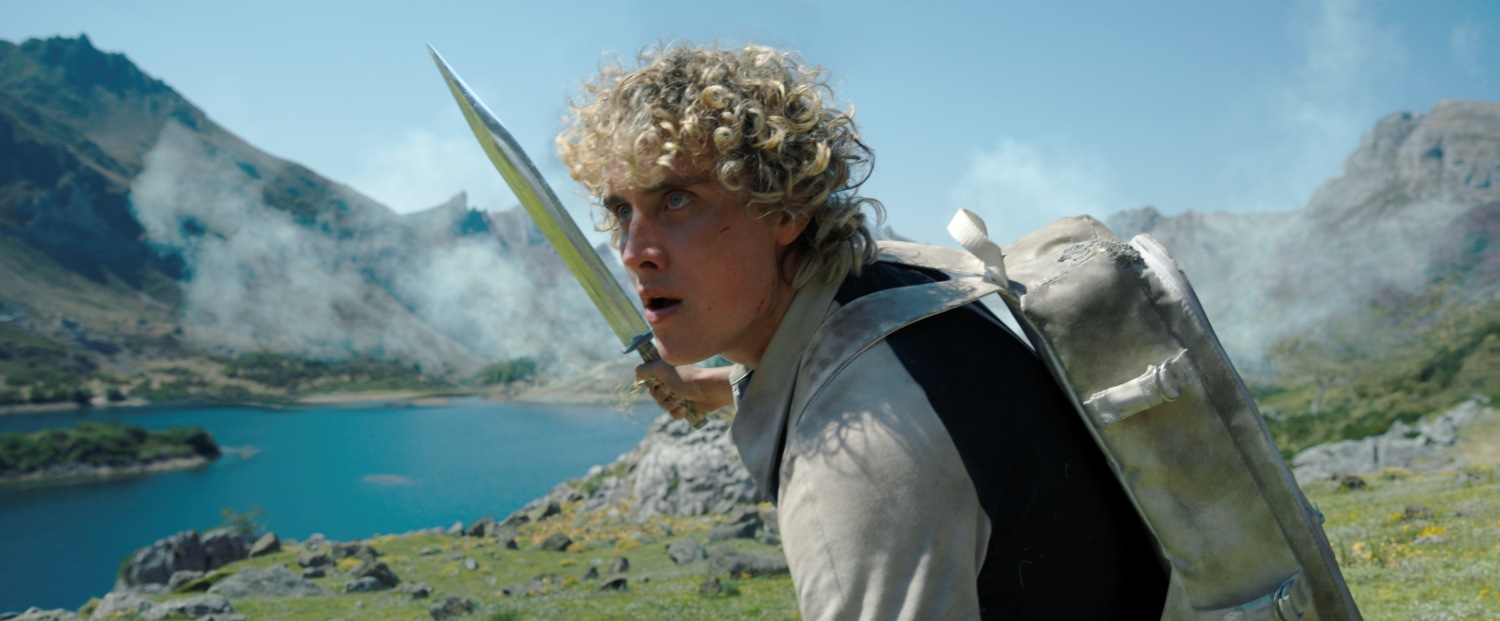
by Gill Pringle in LA
Australian actor Joseph Zada, 21, had just finished filming his starring role in the sixth film of the Hunger Games franchise when he happened upon four-time Hunger Games veteran Liam Hemsworth at the Australian Open earlier this year.
“He actually came up to me and gave me a hug and said congratulations. He said he was very much looking forward to going and seeing it,” says Zada who, as a teenager, honed his skills on Aussie TV series Total Control and Invisible Boys.
“But I have his number now, so I’ll be able to text him if I ever need to reach out about anything. I’m sure that the world will get a bit crazy pretty soon, so maybe I will,” says the Sydney-born actor, son of actor/director/founder of The Old Fitzroy Theatre Jeremy Cumpston and producer Jessica Brentnall (Sleeping Beauty) and half-brother of Hal Zada (nee Cumpston).

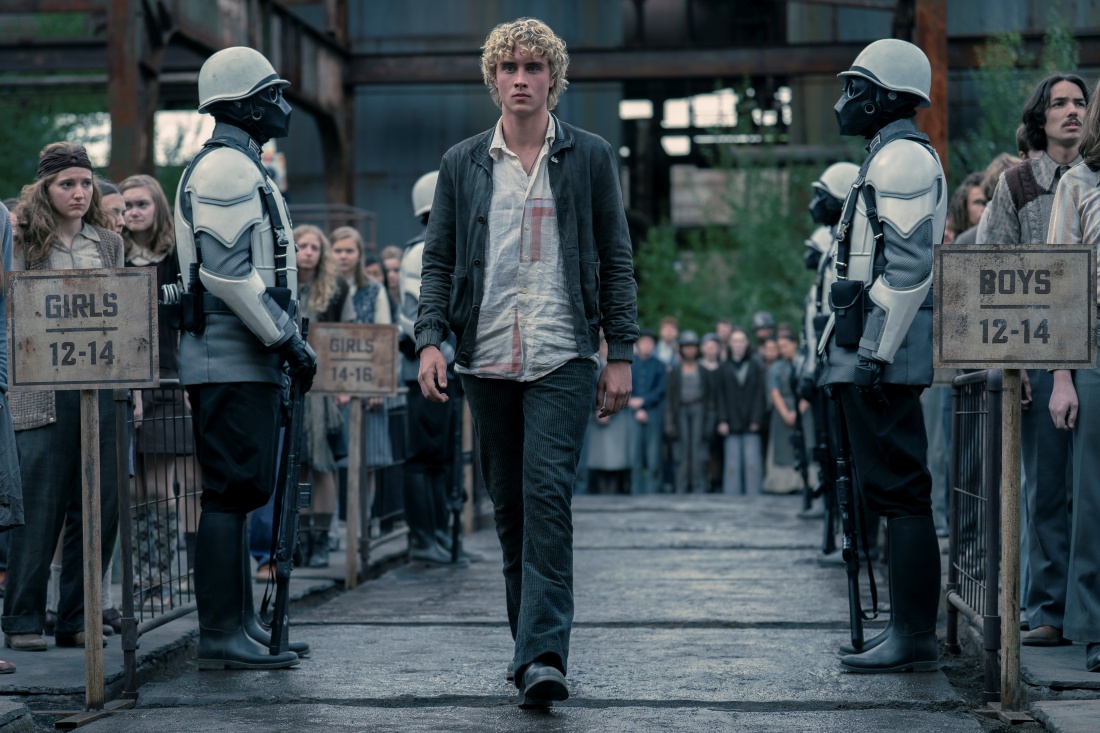
This new installment – The Hunger Games: Sunrise on the Reaping – returns us to District 12 where, once more, the annual “Reaping” leaves families devastated and torn apart.
This particular year is even worse than previous or future years given how it marks the 50th Hunger Games – known as the Second Quarter Quell – a dark anniversary which calls for the Panem Capitol to double its demand for tributes, resulting in four tributes from each district being forcibly sent to almost certain death.
Zada plays a young Haymitch Abernathy, long before he became the bitter, battle-scarred mentor portrayed by Woody Harrelson, offering a glimpse into the experiences that shaped one of the franchise’s most complicated characters.
Set 24 years before Katniss Everdeen entered the arena, the Second Quarter Quell is no ordinary competition. With 48 young people fighting for their lives, it’s a televised nightmare designed to remind the districts that rebellion comes at a terrible cost.
With Haymitch caught in the middle of a system built on fear, cruelty, and the entertainment of the privileged, what makes this story interesting is that the character isn’t initially the hardened survivor we remember.
Instead, he is young, vulnerable, and still capable of believing that courage and determination might actually make a difference.
With his dark hair dyed a Haymitch blonde, it was important for Zada to get the accent just right, “It took so long, and it was such a daunting process. I think every accent is daunting because you want to work at it so much that you’re never thinking about it,” says the actor who also appeared in Bilched (directed by his dad and written by his brother) and The Speedway Murders.

“I can always tell when an actor hasn’t done enough work on their accent. You can see it in their performance. You can see them thinking about it, and it’s not truthful. You have to work so hard to get to the point in which you really, really believe that voice.
“I would spend every single day on set in accent – just to constantly be living inside of it, and understanding. Because also you have to do emotional scenes where you can’t drop the accent. And when you’re very emotional, it’s easier for it to break out, and you don’t want that because you don’t want to lose those takes.
“It took a very long time – and also seeing the way that it evolves when he becomes drunken and when he becomes tired or exhausted in his body, and finding the physicality of that later Haymitch… It’s all just work,” he concludes.
After spending months on his southern accent, Zada was delighted when Woody himself came to set halfway through filming. “I think we were talking about the stoicism of the character, and I was worried that he was too emotional and breaking at the seams – and I think that that was allowed because he was so young – but I just wanted to find his everyman quality,” he recalls.
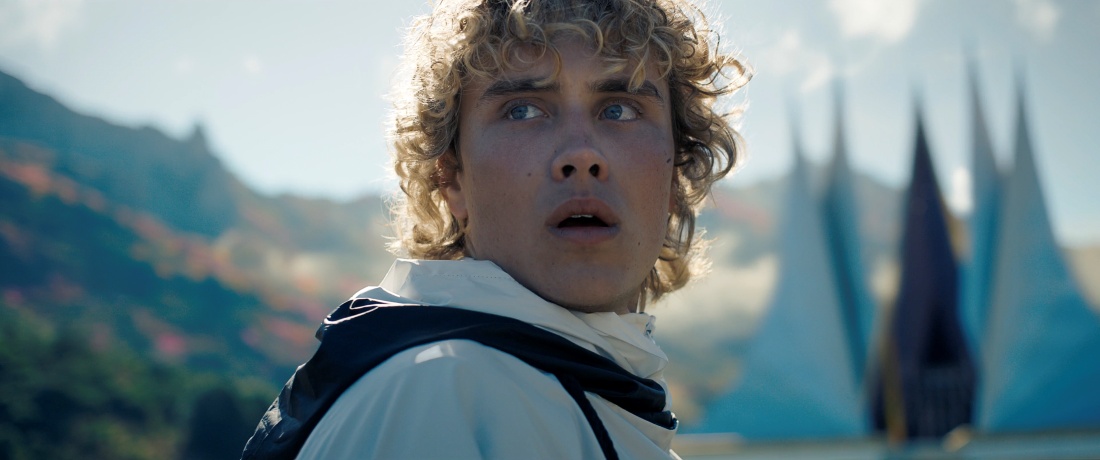
“And Woody told me to go watch Cool Hand Luke, which is a sick film, and that really helped me, and I think it was really important to have that reference in mind. But other than that, we just had a good chat.
“I think for me, it was about trying to hold on to the people that they were before the games; really trying to hold on to that hope throughout the entire film and that optimism that the character has.
“I spent a lot of time in that last final act of the film trying to really get down the Woody-isms and try and make it really believable that you can see this character turn into the Haymitch of 24 years later,” he says.
Haymitch’s relationships – particularly with District 12 sweetheart Lenore Dove Baird (Whitney Peak) and fellow tribute Maysilee Donner (Mckenna Grace) – give the story an emotional foundation beyond the bloodshed. There’s something particularly painful about watching young people forming connections and discovering hope when their circumstances are designed to destroy both.
In real-life, Zada and Mckenna bonded off-screen in the same way the original trio did more than a decade ago, the two co-stars confessing to recently having had matching tattoos, just like their predecessors.
The returning world of the film is also populated by familiar faces and intriguing new characters, including Ralph Fiennes as President Snow, Glenn Close as Drusilla Sickle, Jesse Plemons as Plutarch Heavensbee, Kieran Culkin as Caesar Flickerman and Elle Fanning as Effie Trinket.
Their performances help give Panem a sense of continuity while reminding us that this universe has always been about more than one hero or one rebellion.
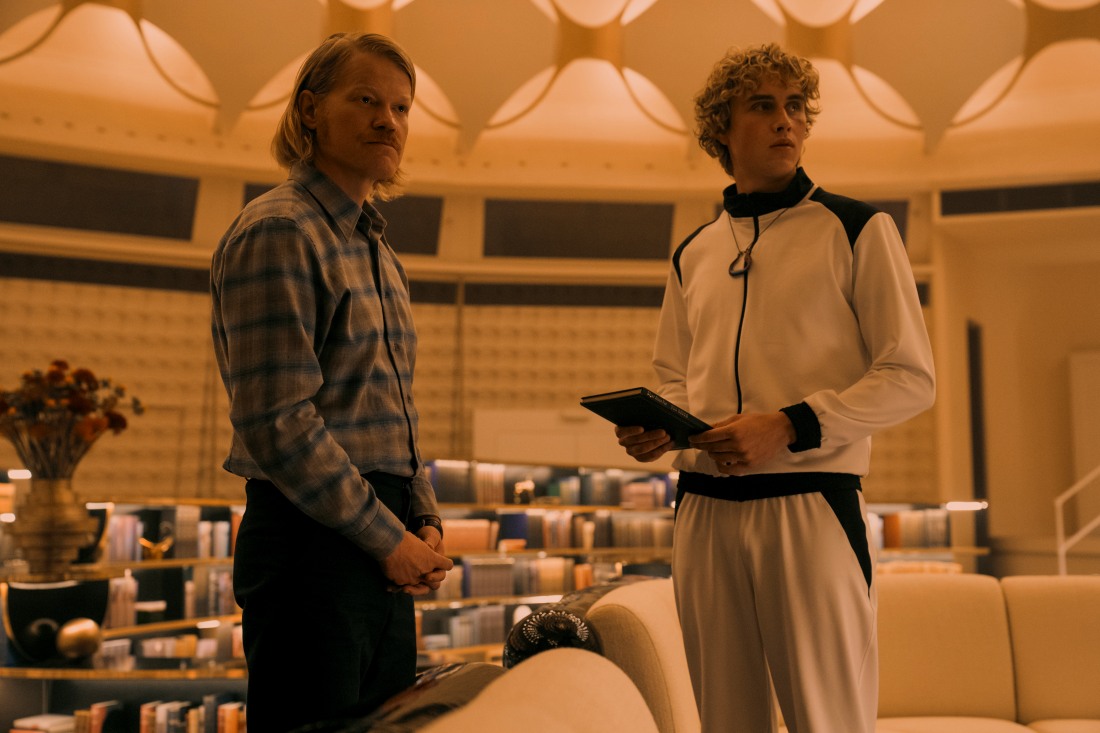
Ultimately, Sunrise on the Reaping is a story about the cost of survival and the emotional damage that can linger for decades. It takes a character we thought we understood and gives him a past filled with love, fear, courage, and loss.
And perhaps that is the cruelest part of returning to Panem. We know Haymitch survives. But survival, in this world, is never the same thing as winning.
The spectacle created by author Suzanne Collins’ best-selling books is seductive, but underneath it is the same ugly truth: these children are disposable to the people running the show.
While in-demand, Zada can currently be seen in US TV series East of Eden and We Were Liars, and he continues to turn to his homeland for a reality check. “I could do a lot better of a job at trying to detach and take care of my mental health,” he says. “But I also think that right now, being a young actor and also with these opportunities that I’ve been given, I don’t want to do anything less but give my all to it, regardless of my mental state after leaving those jobs.
“But I have such an incredible support network with my work but also with my family and friends back at home. They pull me out of it pretty quickly. And being able to go home to Australia and just sit by the beach all day – it only takes like a month or so to really figure things out again.”
The Hunger Games: Sunrise on the Reaping is in cinemas now
