

By Dov Kornits
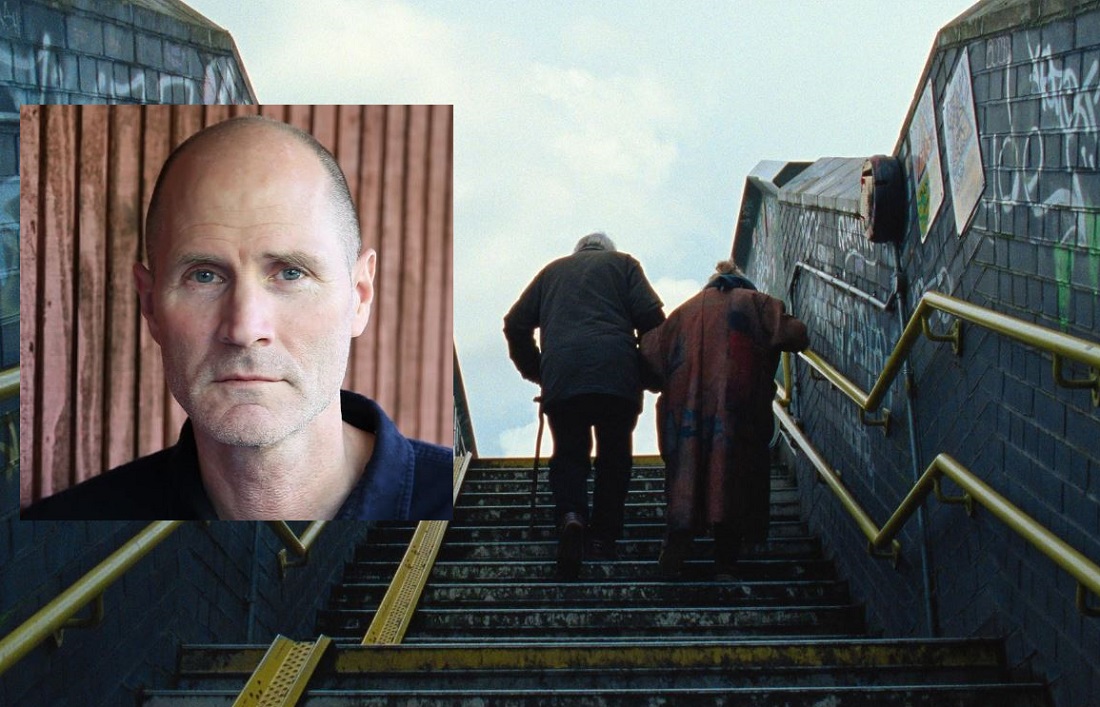
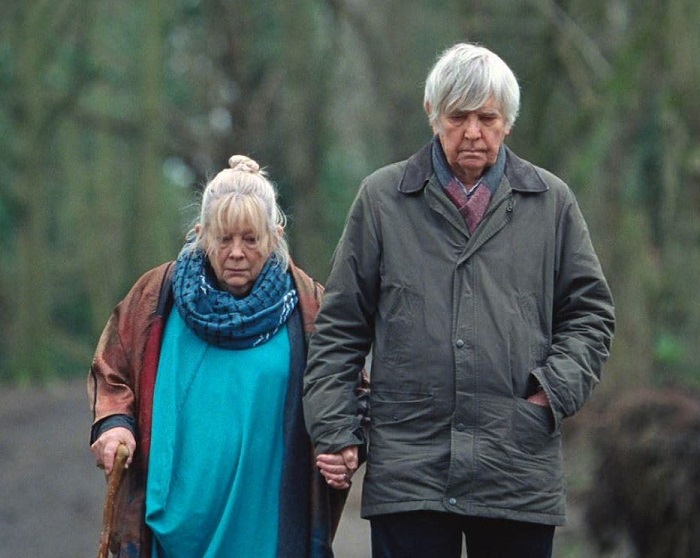
American director Lance Hammer heads to Europe with Queen At Sea, a haunting drama about a father and daughter (Tom Courtenay and Juliette Binoche) navigating the pain of life with their wife and mother (Anna Calder-Marshall), who has been cruelled by dementia.
“When I saw Wings Of Desire when I was nineteen-years-old, I wanted to be a filmmaker, but I didn’t think it was possible,” Lance Hammer tells FilmInk. “I thought you had to be in the family somehow, so I studied architecture instead, which I also loved very much. I practiced architecture for a brief moment, but I got right into art departments and studio films and I did a lot of computer graphics and architectural design and I ended up being an art director. And then I started writing my own stuff and stopped working within the studio system.”
So, after designing buildings, working in the visual effects departments for films like Batman Forever, Batman & Robin and Practical Magic, and creating storyboards for The Coen Brothers, California-born Lance Hammer found his true calling as a filmmaker, making his debut with the 29-minute short feature Issaquena in 2002. Hammer’s feature film debut came six years later with 2008’s downbeat, Mississippi Delta-set Ballast, which tracked the effect of one man’s suicide on the people around him.
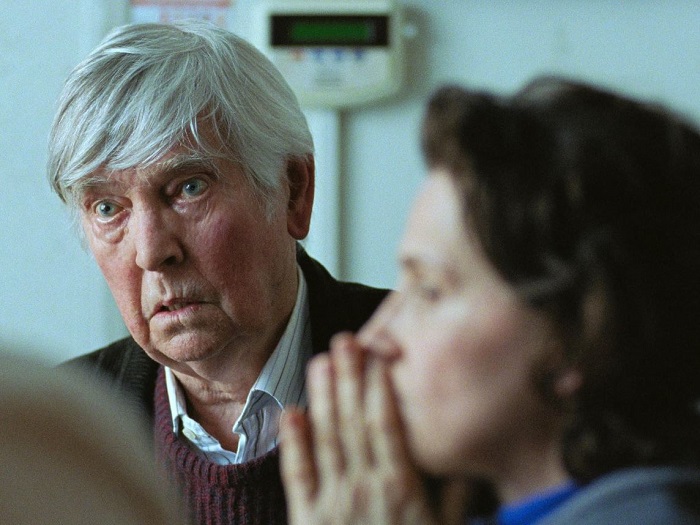
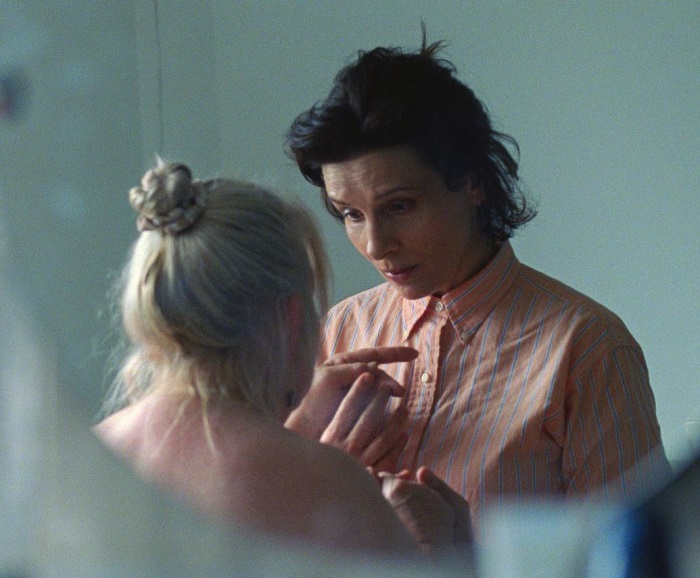
Lance Hammer has now released his sophomore effort, Queen At Sea, which represents a major jump in ambition, as well as a major location change to England. After working with unknown actors on Ballast, Hammer now collaborates with two genuine giants of the European cinema in Tom Courtenay and Juliette Binoche, along with the gifted Anna Calder-Marshall. Dealing with difficult, confronting subject matter, this deeply affecting drama follows Martin (Courtenay) and his daughter Amanda (Binoche) who struggle to act in the best interests of Leslie (Calder-Marshall), their much-loved wife and mother. Asking questions about familial responsibility, personal autonomy, and the role of professional care, Queen At Sea is a wholly authentic, heart-rending work from a brave and richly talented filmmaker.
Can you talk about your process? How did the film come together? You workshopped the story?
“Yeah, the workshopping is a prolonged process. I had this fantasy of just writing an outline or a treatment, but you can’t get anybody on board with just that. So in the end, I just wrote a complete script. I did a lot of research on this one with the professionals that are involved, the institutional response to the story points, so that I was writing accurately. It required a lot of consultation with real professionals. The script was just to attract people to the project…actors and financiers. I always said to everybody of importance involved, particularly the actors, that the script was just a starting point. We did a month of workshopping on this…everyone was happy to do that. The actors were all very excited by it, so we went into a workshopping mode. We took every scene and said, ‘Okay, we have a script, but let’s just forget about it. Let’s talk about every scene verbally, and go through it. If we want to use the dialogue from the script, great. But if you want to change it to something more comfortable in your mouth, change it.’ That all gets folded back into a working draft of the script.”
Do you do that in a studio?
“It’s expensive to secure your location for a month ahead and get it prepared. But you want to be rehearsing in the locations because locations inform everything; they give you discoveries of new ways you can move the scene or change the scene. But at first, we started in a pub that was wasn’t open during the day. Then we got the locations, and that’s when things really took off because we were also doing camera workshopping at the same time, and those two things work together. I’m working with the actors, and I’m also working with the cinematographer, and we’re all working together. There’s really not a lot of distinction between roles at this point. We’re all eating lunch together and talking about ideas, and everything’s just welcome to be put on the table. It evolves very organically, and there are pretty significant changes to the script…mostly the script stays intact, but very important things do change.”
And you cast some of the medical and care professionals in the film?
“They were involved first as consultants. They’d come to the workshops, and they’d walk us through a scenario. They’d say, ‘This wouldn’t happen, this would happen instead.’ And Juliet would say, ‘Well, but if you said that, did I have to do that? Then here’s what I’d say.’ That would be different from the script. And they’d say, ‘Okay, well, if you did that, then this would happen.’ And so I always had to follow the truth. Whatever those professionals told me would actually happen, that’s what we have to do. And then the actors would respond to that in the way Juliet’s own nature would respond to it, or Tom’s own nature would respond to it. I have a faith in following the truth that if you do something, the truth will be visible when you’re in the product. And then I cast all those professionals. Actually, I asked them if they wanted to play the roles, which offers the most profound level of truth with their particular vernacular and idiom and the way they move when they’re doing their job and the things they do…there’s no way you can act that. It’s such a highly specific technical skill in one of those professions. They just have to be the real people or else it seems like actors.”
Do you storyboard?
“We didn’t storyboard anything. I don’t object to storyboarding. I did a film as an art director for The Coen brothers, The Man Who Wasn’t There, and they storyboard every little thing beforehand, and then they just go shoot it exactly as their storyboards. They’re very precise and they prepare everything beforehand. I like to find it not in the hypothetical piece of paper, but the actual locations with the actual people, and we’re just there on the set figuring it all out. And then when you’re workshopping, you do it over and over again. It becomes rehearsals, really. And so by the time you start rolling cameras, you have it all figured out, very much like The Coen Brothers when they do all their storyboards. But Adolfo and I were figuring out the shots as we were figuring out the way the scenes worked with the actors and what language would be used.”
You’re certainly dealing with some contentious ethical issues…
“I was careful not to try to talk about any sort of moral position. When I was talking with the actors, I really wanted each actor to interpret their part the way they actually would as real human beings. I didn’t want them to just convey what I felt. I’m very conflicted and remain conflicted, and that’s why I wrote this story. These are very complex moral problems. I was very curious. How is Juliette Binoche going to respond to this? What’s her position? What’s her moral stance on this? And how is Tom? I listened to them and we would talk about it. I was really willing to listen when it would come out. And I kept saying, ‘I want you to interpret this the way you want to and then bring that to your part.’ And in the workshopping, it’ll come to the surface if it’s going to work or not. For example, if Juliet has a very different moral view than Tom does, it’s going to come out in the workshops.”
That’s complex work…
“To be honest, now that it’s all said and done, I’m not entirely clear what their positions are. I know a little bit more about Tom’s because he talked a little bit more about it, and I know Juliet’s too, but they’re complex. Tom and Juliet both have complicated relationships with what their characters do. But I imagine with different casting, it could have been very bad. It could have worked out very badly. If somebody was having too much moral certainty, maybe it would’ve created conflict within the cast. I don’t know. We got really lucky that way that through the workshopping process, we became very, very close with each other, like a family, and loved each other very much, and they weren’t always in character.”
They were being themselves. I guess that’s what lit the spark, right?
“That’s what lit the spark for me to start writing the story. I’d read a couple of accounts. I’ve been hearing all these stories about dementia. My dad is Tom Courtenay’s age, and he’s very sharp. He hasn’t lost anything, but his friends have started to, and he’s really suffering from that…the grief and confusion and sense of death around him. I also became very aware of other dementia stories just in the news. And then I read a couple that dealt with similar sexual consent issues with dementia…I don’t know what’s right and wrong here, and I feel bad. I feel guilty for that. I feel shameful for that, but I imagine I’m not the only person that feels this way, and that’s a really good position to write a story from, where you write it from a position of moral ambiguity. You explore over 120 minutes in as much detail as you can of these incredibly difficult moral dilemmas that families have to face around these issues. And then at the end of the film, you’re at the same place as you were when you started, which is not trying to make some sort of moral statement, but just saying, ‘This is complex. Let’s look at the complexity, and at the end, let’s not say there’s an answer because I don’t have any.’ The grey is where life happens.”
Anna Calder-Marshall gives an incredible performance…
“She’s the one actor in the film that really has to act, because she’s very sharp, and she has to act like she has dementia. That was the critical challenge, I thought, going into the film, ‘If this doesn’t work, the film’s just not going to work.’ With most films about dementia, the people that play the roles are exaggerating and they’re hyperbolic, and there’s a tendency for actors to really just lay it on and be theatrical about it. I still wanted Anna’s interpretation of it, because I had this feeling that I still wanted Annie’s true nature to come out…not an actor, not a role, but her true nature needs to come through, but she has to act like she has dementia. So that’s a tall order, and she did a lot of research. She went to care homes with memory units, and she sat there for many days watching people and talking to the residents, but mostly observing their physical gestures and the way they move. She’d been going through some things with somebody close to her, so she was witness to a lot of very real demonstrations of dementia.”
What was your approach to the depiction of Leslie’s dementia?
“I wanted it to be very nuanced. Ideally, I wanted us to have the first several scenes where you didn’t know whether or not she had dementia. It would be something you’d learn through time, but I think the first scenes you know right away, but the idea was to be very subtle and rely on the fact that the film takes place over a lot of time, so we’ll figure it out. And the key to realism is subtlety. Anna knew that. She tried a lot of different levels of dementia, and we arrived at something that we thought was the right degree, and it’s really what she felt it was. That’s her own interpretation and her own research. And if I tried to tell her how to do something, it wouldn’t feel right to her, so I just had to have faith that she’d find it herself.”
Did you see yourself as an émigré director? As an American working in England?
“I expected it to be like that, but in the reality, there was very little of that. I think that’s because I present a story and then I let the actors interpret it the way their own natures feel comfortable with it. Tom used a lot of his own language in the film…there are so many things that he invented. I relied on my crew too. I’d always say, ‘Is this a little too on the nose because it’s more like a tourist choice? I’m an American tourist in England, or is this what you would do? Does this work?’ I was constantly calibrating myself off the crew members, especially with our producer, Tristan Collins. I had a really great team of truly British people that I always turned to. But Juliet’s French, and Adolfo Veloso is a Brazilian cinematographer. The outsider’s view is always interesting. We were talking about Wim Wenders earlier, and he was a master at capturing America. An outsider’s observation of a culture can sometimes cut through to truth in a way that somebody that’s just too biased by being there can’t. Sometimes that works, but sometimes you look like you’re a tourist.”
Did you want it to be distinctly English?
“I try to be universal. I actually wrote this for New York, but ultimately, I wanted to write a script that could be shot in any major city in the world. That’s for financing flexibility and casting flexibility. But I really wanted to work with Tom Courtney and Juliette Binoche, and shooting in England was easier. As I was writing, I wasn’t thinking of place. With my previous film, Ballast, it was very much about a place, The Mississippi Delta, and the story came out of a place. This was the other way around because I wanted to have flexibility, so I tried to write the most universal subject that could be shot anywhere. So maybe that worked. I don’t know. It doesn’t matter where it was.”
Are you hoping there’ll be less of a gap for your next film?
“Yeah, definitely. The idea is to try to make something as quickly as possible, but without rushing something through that’s bad, but hopefully this film will help me have a little more access to some actors, for example. Juliet and I want to work on something together again. She’s brought somebody else to the table. But yes, I definitely want to work faster.”
Queen At Sea screens at The British Film Festival. Click here for our review. Head to the official website for all venue and ticketing details.
