


by Liam Heitmann-Ryce-LeMercier
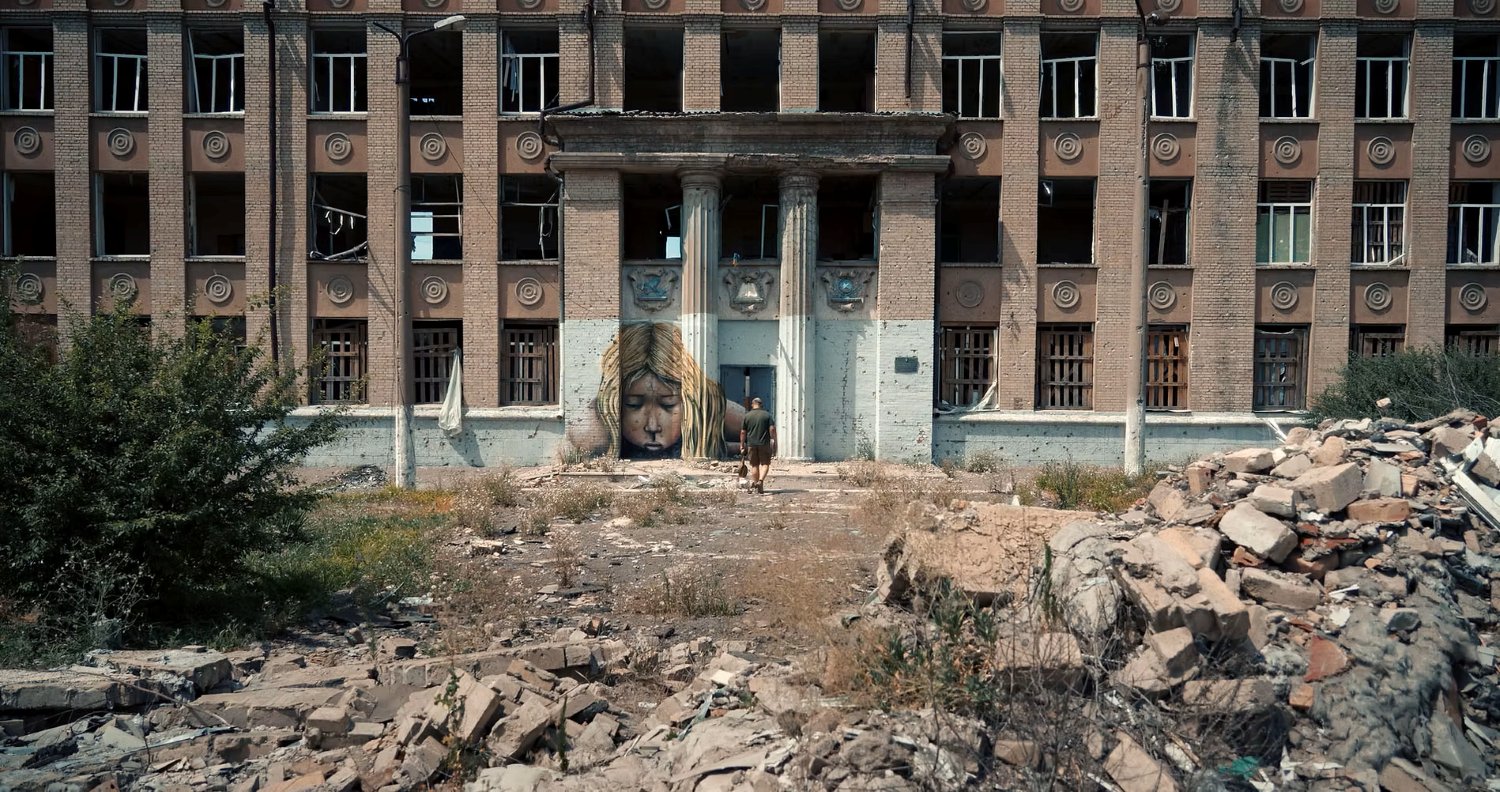
Our Colors Never Fade presents a unique perspective of Russia’s full-scale invasion of Ukraine, exploring the stories of Ukrainian LGBTQ+ soldiers fighting for a country that is struggling to come to grips with its queer community.
American writer-director Jim McSherry and Australian producer Karl Hillbrick presented the European premiere of new documentary Our Colors Never Fade in Berlin on Wednesday 11 November. Casting a close examination of the emotional toll of the Russian invasion of Ukraine for the soldiers defending their country, the film received the Demand Justice Award in the second annual city-wide Berlin Freedom Week initiative.
Uniquely, the film presents a variety of perspectives from LGBTQ+ Ukrainians risking their lives in defence of their homeland.
Approaching the five-year anniversary of the full-scale invasion in February 2022, the film serves as a timely – and deeply affecting – reminder of the impacts of this ongoing war and how much it has changed the lives of those caught in the middle of it.
 For producer Karl Hillbrick, splitting his time between Canberra and Berlin, the first spark of what would become Our Colors Never Fade came in the form of a 2024 correspondence from a mutual friend of his and McSherry’s.
As Hillbrick recalls, “Jim basically suggested we sit down and talk about the project. We went through it and realised we could work together, but I said, ‘Look, I have almost no background or expertise as a producer working with the queer community, although I do have a family background in the military. So how does that fit?’”
The director’s response was that he needed a producer of his experience and expertise to get the project put in front of the right distributors and investors, relying on Hillbrick’s six years working for Australasian/European production company Infilmpact.
Boots on the ground
While Hillbrick eventually undertook an active role in the film’s production, his original duties were rather more plush than those of trekking through Eastern Europe.
“My role in the film initially was as the festival and market consultant,” he says. “My role was more focused on distribution, festivals; the whole promotion and advertising side of things; and securing festival selections.”
It was upon joining the film’s small crew, however, that it became apparent that the director’s preference be that Hillbrick really produce the film, rather than just assisting with distribution deals.
“From that point forward, I became more heavily involved in the editing, when it came to helping create a film that could reach a broader audience. Ultimately, the film follows Jim’s artistic direction.”
The two filmmakers agreed upon the shared imperative that they hire as many Ukrainians as possible, ensuring the film’s production had its primary base within the country while directing the maximum possible budget into Ukraine.
However, McSherry and Hillbrick established an ethical guideline around which the film’s production would be framed, in that nobody on the crew would actually enter Ukraine except the director. Even the film’s Ukrainian editor, Sasha Shuklin, remained in Berlin.
“That was the case until we had our participant screening in Kyiv,” Hillbrick explains, “when I actually needed to enter Ukraine and be involved in the management of that particular process. It was quite a sensitive moment for the production.”
‘I stand with Ukraine’
Hillbrick’s motivations for making the film are assured and direct. “I made this film because I stand with Ukraine,” he asserts. “I’m interested in productions that will advocate for Ukraine and its people, with the potential for international distribution.”
His hopes for the film, following its European premiere, are that it will inspire conversation about a community fighting for a country regardless of the inequal rights afforded to them as queer people.
Of the LGBTQ+ soldiers defending their homeland, Hillbrick says, “They have a country that’s struggling to come to grips with the queer community, who they are, and respecting their basic human rights. In terms of what we’re achieving, I see support for Ukraine as critical, and bringing this key message to international audiences is really about two objectives that are moving in the same direction.
“I think sometimes the broader audience feels that the queer community are always the afflicted and always the victim. This film presents a very different picture – and an important one, including themes of courage under fire and service before self.”
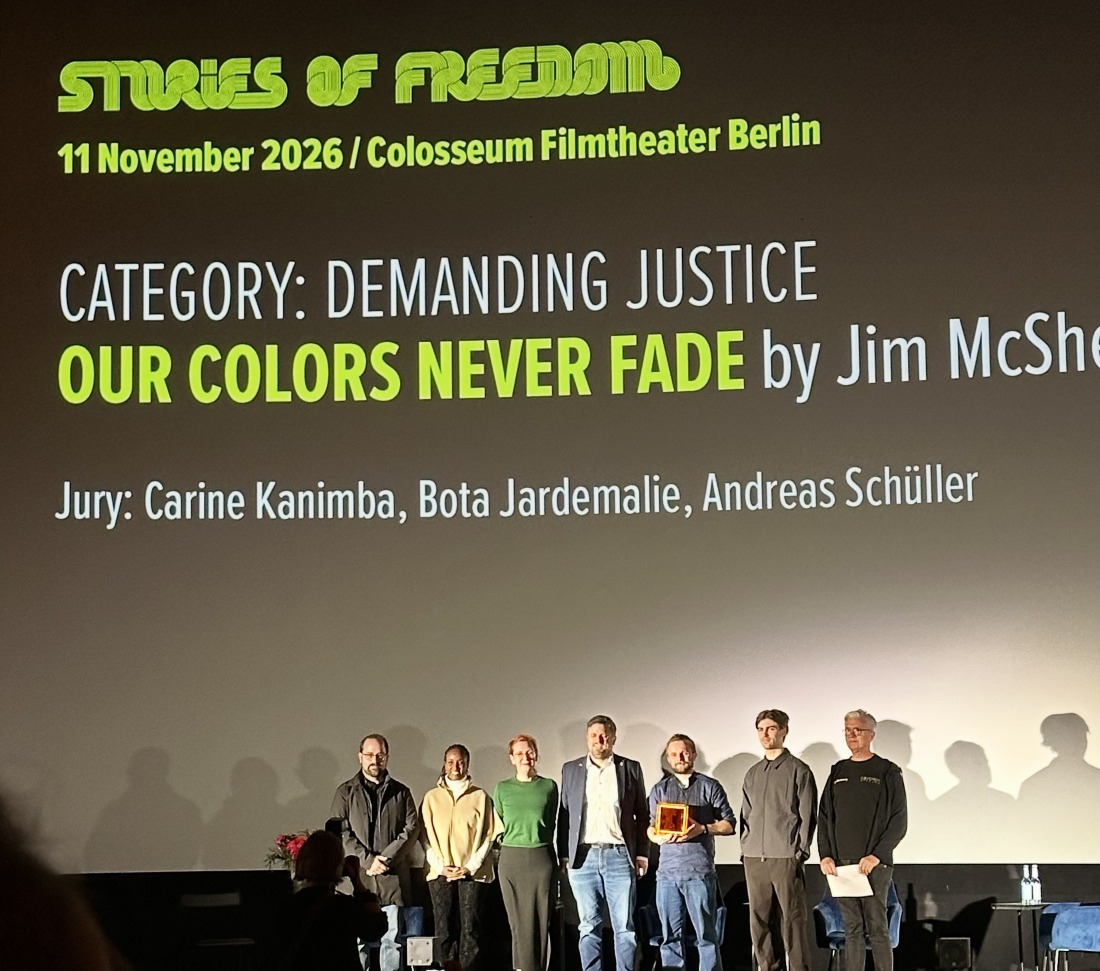 Hillbrick considers the film’s selection by Berlin Freedom Week, and its subsequent win in the Demanding Justice category, as a critical milestone. The win follows selection by the Raindance Film Festival in the UK and a nomination for Best Documentary Feature, as well as the Australian premiere hosted by the European Union Delegation.
“It was a brilliant premiere on the European continent,” he says of the recent Berlin screening. “Very happy with the turnout and the enthusiasm from the audience, from conservative and left-leaning alike, which was what we hoped to achieve.”
Ahead of the film’s release, Our Colors Never Fade was presented to the soldiers interviewed on the battlefield. Hillbrick emphasises how challenging this was, as the experience is naturally a confronting one for those still in the midst of war.
“But it was necessary to do that, and we had to do that,” Hillbrick says. “It was part of our ethical statement, because there has to be that ongoing consultation [with the soldiers]. Not that we were asking for a blessing on the film, but we wanted to make sure we got it right.
“In Ukraine, when we were doing the crew screening, everybody was watching the screen, and I was watching everybody else. It was important to observe everyone’s responses, both verbal and through their body language, to understand how they felt about the film. And we got that feedback from our film’s heroes who were able to attend the screening.”
