



by Gill Pringle at San Sebastian Film Festival
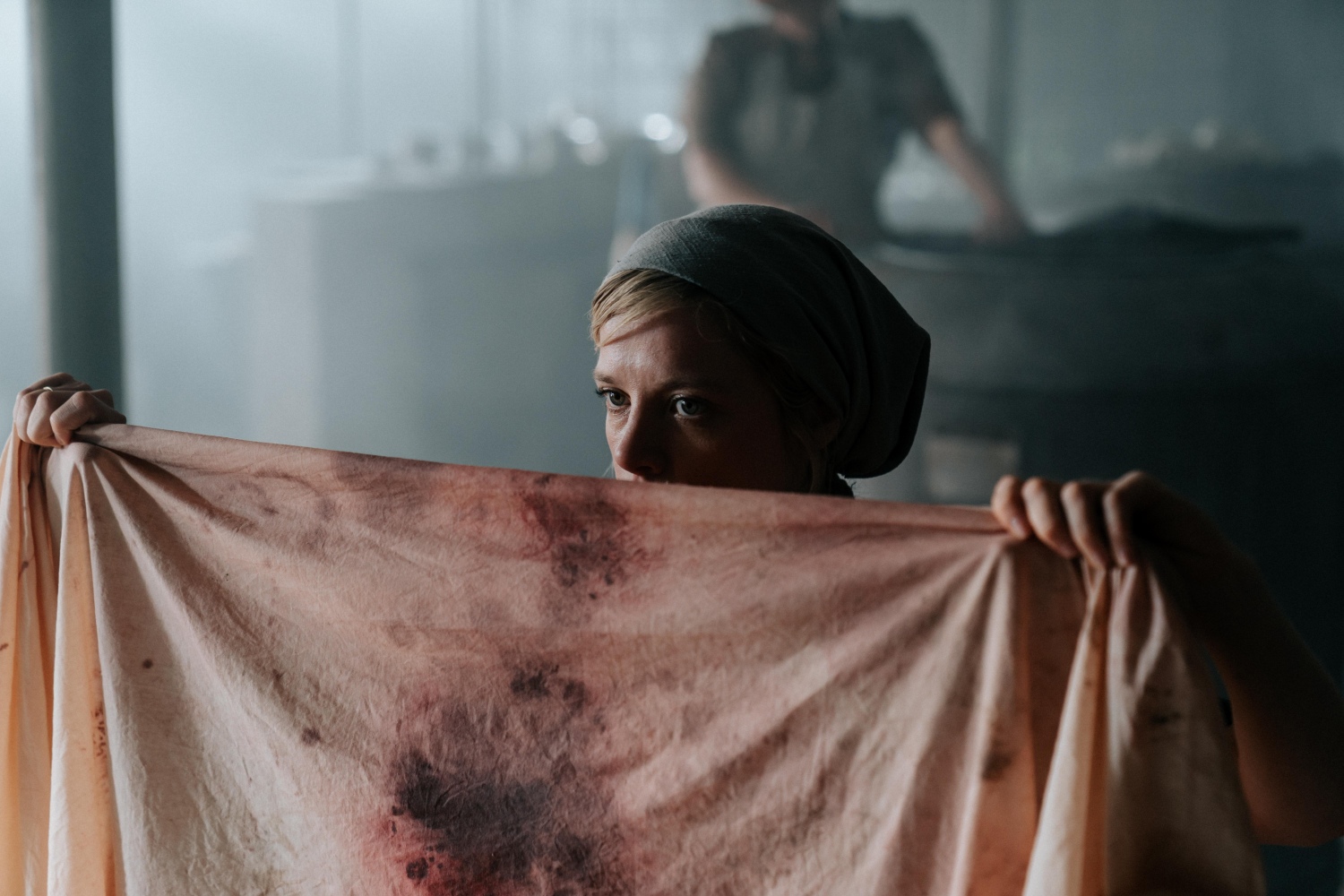
Set in a small German village in the final throes of WWII, the Nazi regime has advised its citizens to leave nothing alive for the enemy to find. The villagers – mainly women and children watched over by a priest, the mayor and a school teacher – still believe that the war will end in their favour. That is, until bodies start washing up in the river and they are led to understand that suicide is their only option.
Such is the haunting premise of Tony Vahl’s Krux, which plays like a horror film, as it slowly exposes the Nazi death cult where cyanide capsules were distributed across the nation; one scene showing the teacher instructing his pupils on how to tie their own noose rope knot.
View this post on Instagram
“My interest in the immediate postwar period was first sparked by my grandmother’s stories,” says German director Tony Vahl. “As a child, she told me of countless corpses floating down the river – she called it ‘going into the water’. I did not understand then what those words truly meant. To me, it sounded like something out of a horror story, a dark fairy tale that fed my imagination.”
Krux is filled with haunting images such as a father feeding cyanide to his young son or a woman filling her pockets with rocks and submerging herself into a lake.
“I don’t like war movies – so Krux is not that,” insists Tony Vahl, who became fascinated by Florian Huber’s book Promise Me You’ll Shoot Yourself, and also Ian Kershaw’s remarks in The End: Hitler’s Germany, 1944-45, noting how the phenomenon of suicide just before the end of the war was not limited to one village, but spread throughout Germany.
“I felt that this was about more than just Germany in 1945, and that this story had to be told. What interests me about this period is the people and their mentality, their psychology and the prevailing atmosphere of fear.
“Fear of the unknown, questions of foreign control, heteronomy versus self-determination, manipulation and blind obedience, and the weight of words – propaganda,” adds the Berlin and Warsaw based filmmaker.
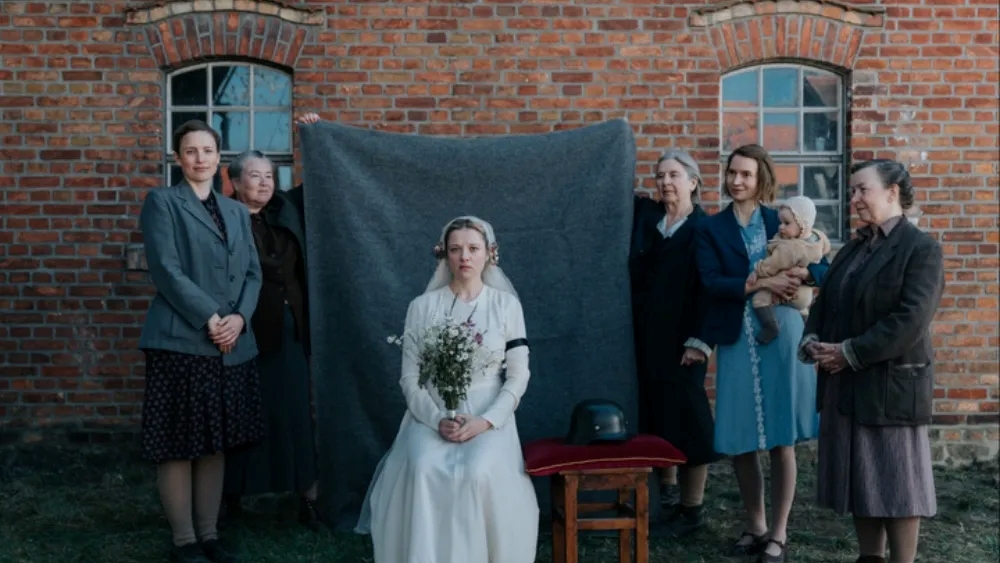
Although Krux is set in a specific era, the themes of pressure to conform and courage of conscience could not be more relevant today, identifying manipulative power and the toxic corrosiveness of dictatorships where leaders demand declarations of loyalty alongside the vilification and degradation of outsiders, the spread of misinformation, and omnipresent propaganda, which are changing today’s politics and society.
And while Vahl’s film is eerie and mystical, it is also based on the reality of Germany’s 1945 springtime. – which whilst being the theme of Mel Brooks’ outrageous comedy The Producers – was anything but funny when the country experienced the largest recorded wave of mass suicide in its history.
In the wake of Hitler and Eva Braun’s own suicides, tens of thousands of civilians, soldiers, and Nazi officials took their own lives as the Third Reich collapsed.
But years of Nazi death cult indoctrination, combined with a total psychological and societal breakdown, left many ordinary Germans unable to imagine a future without the regime. Intense Nazi propaganda also warned citizens of extreme Soviet atrocities, driving panic-stricken families to commit mass suicide as Soviet forces advanced from the east.
In April 1945 alone, an estimated 3,881 suicides were recorded in Berlin.
Vahl would spend almost seven years working on her film, sometimes despairing that it would ever be made.
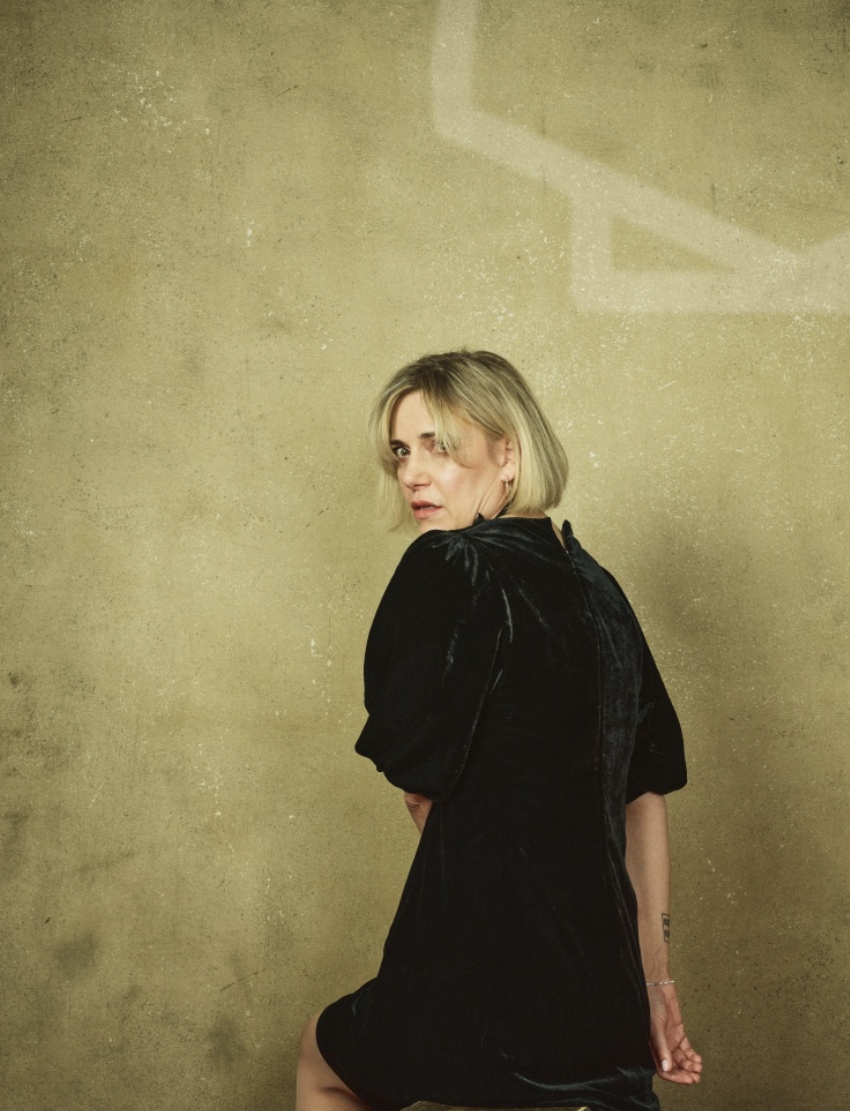
“It’s such a tough, tough topic, I wondered if I would be able to handle it. And it was really hard to find financial support because nobody was interested after reading the script and discovering that it’s a movie about suicide. Who would want to watch it? But then I explain to them that the suicide was more a symptom. It’s about so much more,” she says.
Vahl never wanted to make a WWII movie. That simply didn’t interest her.
“We don’t show the war itself. We show what it left behind in people’s faces and bodies – the traces, not the act. That was enough. Anything more would have been using people’s suffering just for effect.
“What interested me most wasn’t the moment of violence itself, but what comes after – a face, a landscape, a silence that carries something that words can’t express. That’s how I wanted to build a dense, oppressive psychological portrait, something you feel closing in around you, rather than something explained to you,” she says.
If her name might lead to confusion about her gender, Tony Vahl smiles, “I want to be seen as human, right? A human being. I don’t want to have a weird interpretation of: ‘Oh, this is a female perspective’. I want to be seen on the same level with men,” she says.
“Then as now, we are constantly faced with the same questions: Who can and how far do I want to trust? How do I deal with others, my supposed opponents? How do I deal with my doubts? How much courage do I have to use my own reason?
“I made this film to raise questions so we can seek answers,” she says.
