


by Helen Barlow
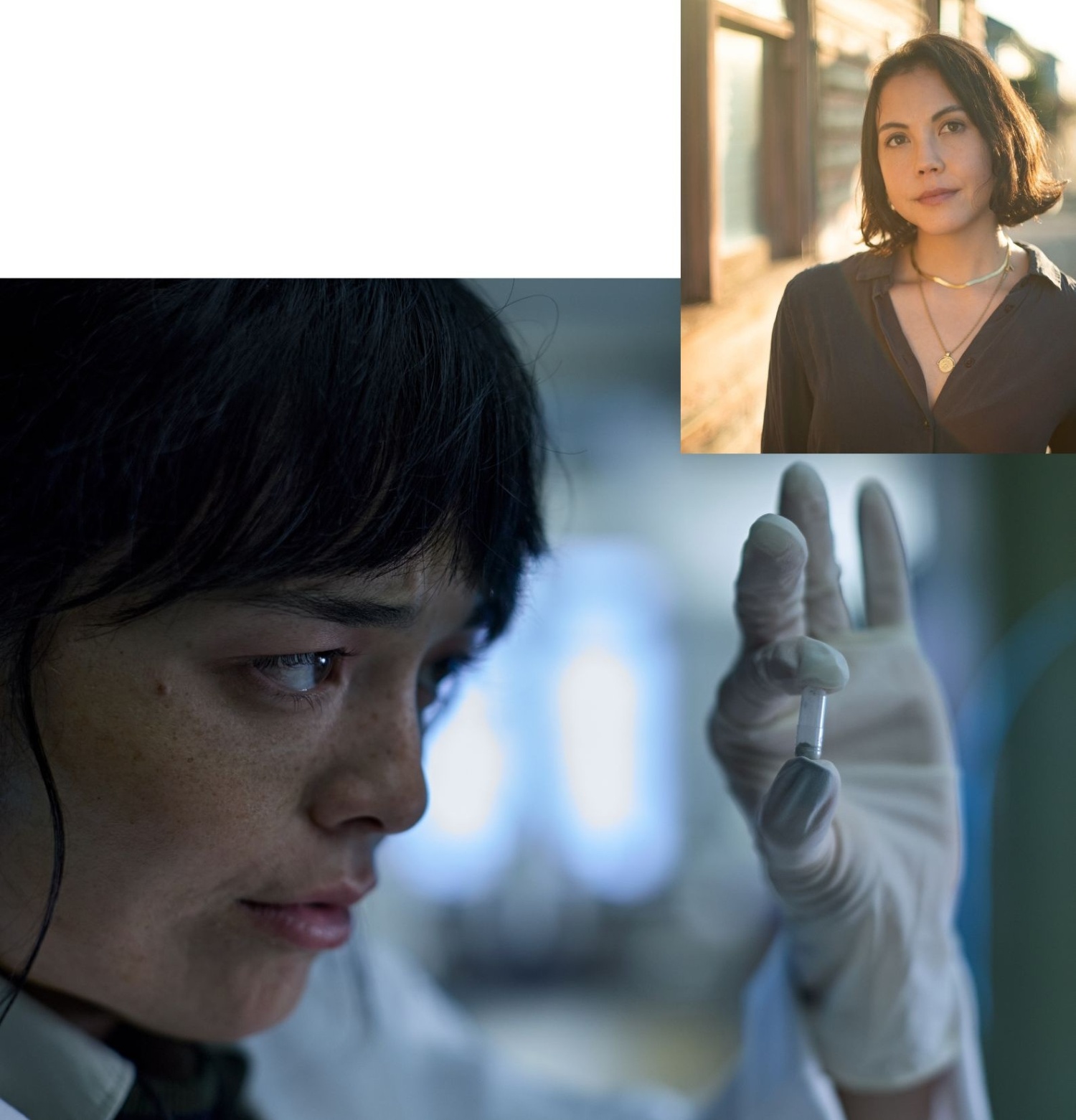
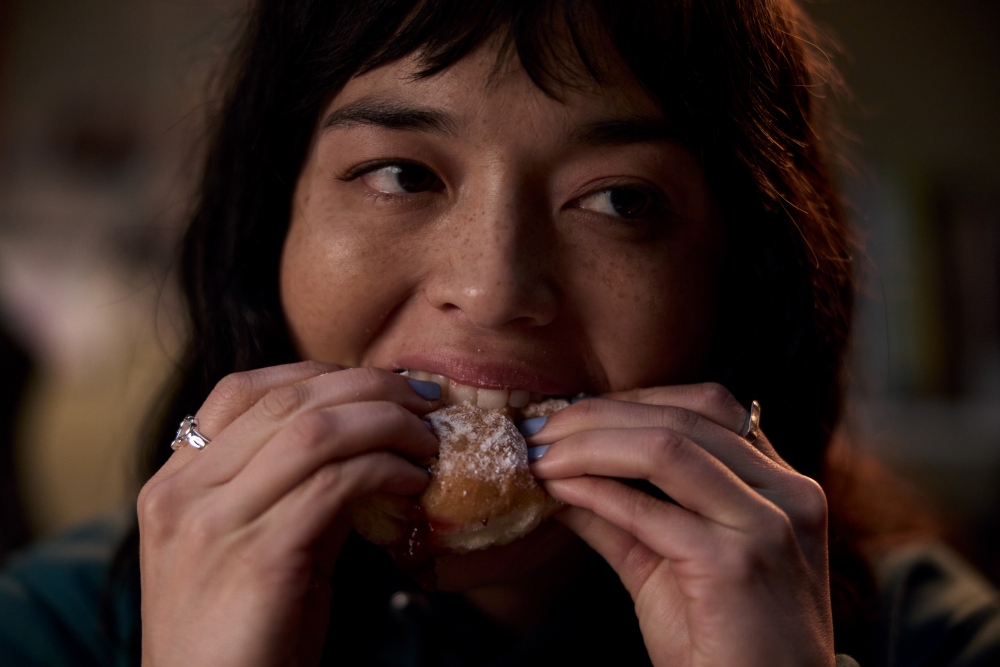
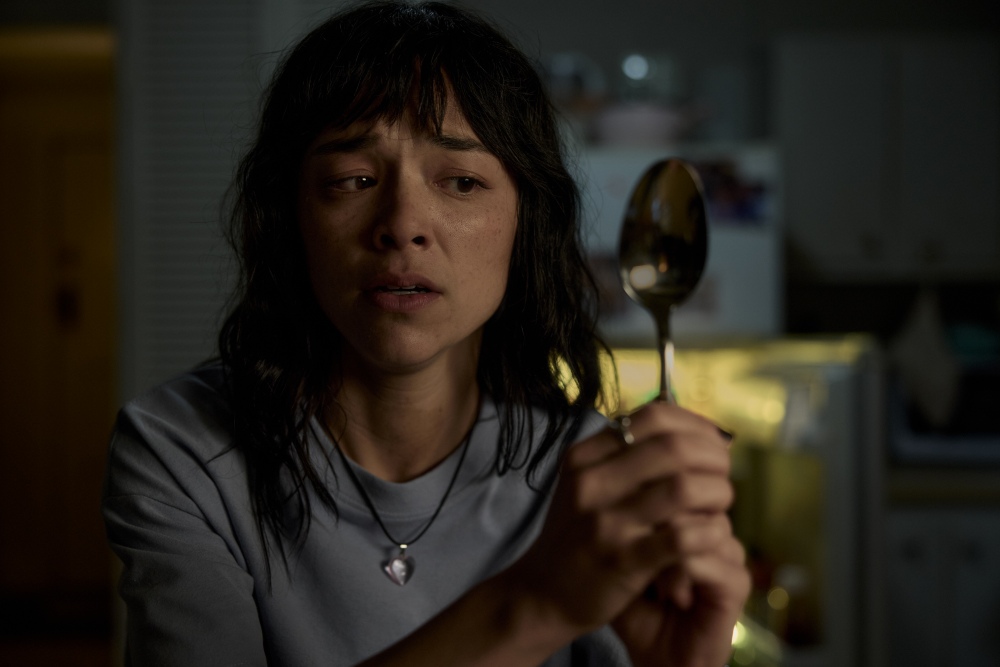
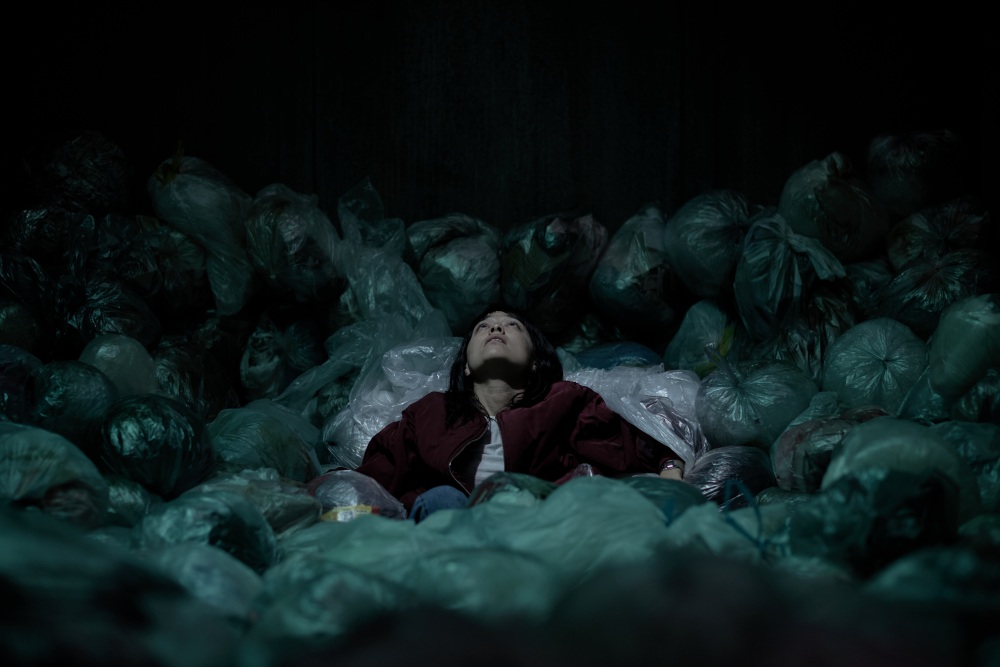
Melbourne writer-director Natalie Erika James has focused on women grappling with dark forces in her psychological horror films. Her dementia-oriented debut Relic (2020) starred an exceptional Robyn Nevin; in her US follow-up Apartment 7A (2024), Julia Garner was a dancer desperate for her shot at fame; and now she has returned to Australia for Saccharine about Hana, a medical student (US actress Midori Francis) who embarks on an obscure weight loss craze – eating human ashes — and is terrorised by the ghost of the former corpse, who used to be an obese cancer patient.
Interestingly, Natalie Erika James was born in the US, raised in Australia by a Japanese mother and an Australian engineer father, while Midori Francis is of Japanese descent on her father’s side.
James grew up watching Asian horror films and Relic was inspired by her Japanese grandmother’s experience with dementia.
In our Berlin Film Festival interview, she says that Saccharine draws on her own experience of struggling with body dysmorphia as a teenager. “It’s the kind of the film I wish I had seen, or that I wish was out there, so that there was a sense of bringing something that’s usually very secret and very shameful out into the open, and the ability to even be a starting point for discussion, to bridge that sense of secrecy.”
Was there a certain aspect of your experience that you wanted to capture in the film that you felt maybe was missing in conversations or other depictions of it?
“Yeah, I think other depictions I had seen had a sense of things being a little glossed over. There’s a responsibility that filmmakers often have to present an idealised version or an idealised conclusion to something. Whereas I think in the horror arts, you subvert that and take things to the extreme to capture the feeling of what it’s like being in the grips of those forces, rather than trying to make some sort of moral statement about our society. That feeling of helplessness and a sense of being trapped is really what I wanted to capture.”
The Substance has a similar theme and was very out there, and your film is very out there too. Is this the way to tell this kind of story?
“It’s certainly not the only way, but because they are also such sensitive themes, retaining the emotional truth of what the reality of having an eating disorder is like is important, while packaging it into this hopefully thrilling ride as well. In terms of horror, the beauty of it is often the way that you can externalise these anxieties or these fears. It felt like the right approach.”
You are known for horror filmmaking. Why did you take that direction in the first place?
“To be honest, I was a very haunted child. I used to have nightmares ever since I was very young and I experienced a lot of sleep paralysis. That makes you hallucinate in your dreams, and it feels like a very physical sensation. Maybe I’ve always had this relationship with the dark that makes me want to lean in, but also, I’ve kind of had this deep-seated fear. So probably, it’s a way of processing the world, the scary world that I experienced as a kid.”
How do you think that this movie relates to Relic?
“Both films are taking a very subjective approach to an experience and trying to sit the audience within it. Hopefully, what is similar to Relic is that there’s a sense that you feel the film first, and then you can kind of intellectually pull it apart afterwards. I think the difference is tonal. I was going for something much more heightened and a little absurd with Saccharine, while of course Relic was so much about loss, grief and decay. I hope both have the same existential thread that I’m particularly drawn to in my work.”
Given your own personal history with body dysmorphia, has making the film changed your view on that in any way?
“Yes, in a way it was cathartic, almost an exorcism of sorts. But I recognise that there is a danger in delving into that part of yourself. At the end of the film, I’m trying to drive home that there is always a kind of a threat. It’s not like self-acceptance is a place you just arrive at. There’s always this ability that we have to slide back into these negative thought patterns, and I think it drove home to me that it’s a constant process of caring for yourself. What I really wanted with this film was for people to seek connection in the face of an eating disorder which isolates you very much. So, seeking healing through connection was my aim in making the story and being able to talk to people about these issues.”
What was the greatest challenge in making the film?
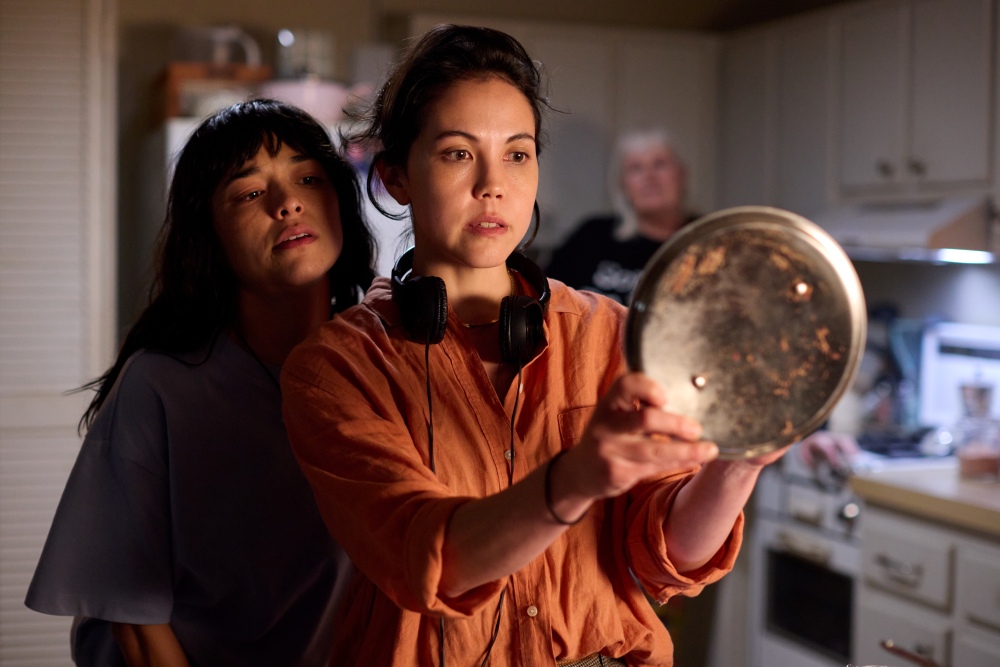
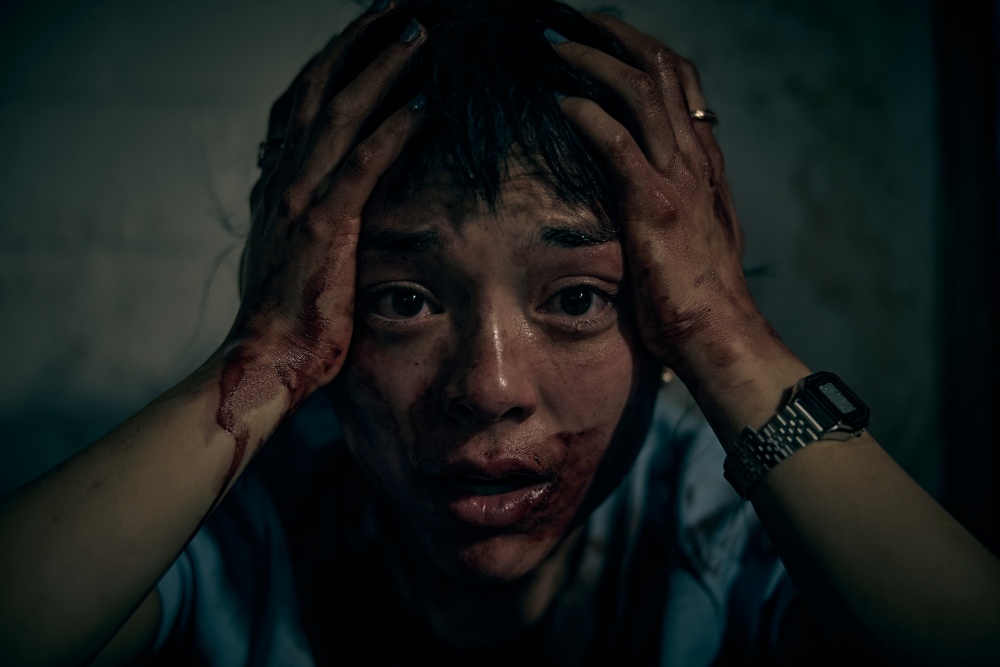
“I would say looking at a very personal story. That dynamic that you see on screen is probably like 10 or 15 years ago in my family. So, I felt that there was enough distance. It wasn’t right in the thick of things, but sometimes there were a few key moments on set where I was like, ‘Oh, this is a hell of my own making’. It’s very confronting. So, that’s challenging, of course, because you kind of think, ‘Oh, I’ve dealt with stuff’, and then it’s suddenly right there on screen in front of you. I think it’s always challenging when you have an actor who’s on screen in every single scene, and especially one with prosthetics on, but Midori just gave it her all. It’s a credit to her that we were able to pull it together, because her energy was so impressive.”
Where did you find her?
“I had actually seen some of her previous work, and then when we started casting, I really had a sense that she was the perfect fit for what I was looking for. I was born in the States and went to international schools as well and have this hybrid Australian-American thing going on. In a way, I felt it was true to the character to bring in an American. She’s the beating heart of the film and it was incredible to have that kind of closeness with someone when you’re going to such depths within yourself and within each other, to find a common language to talk about these intense subjects.”
What are your influences? Have you been influenced by David Cronenberg, a trailblazer in body horror films, or even medical shows like The Pitt?
“I’m a huge Cronenberg fan, of course. I’d say that the films that were my biggest references would be Raw, It Follows and I absolutely loved Together directed by Michael Shanks, who’s a fellow Aussie. Medical wise, what we did instead was go to the University of Melbourne’s dissection halls, and they were very generous in giving us a tour. You’re in the room with the cadavers, the bodies… So, it wasn’t necessarily the medical shows that were the inspiration. But we also looked at a lot of historical medical journals as well, and the way that the bodies were presented there.”
Could you talk about the colour palette, which includes a lot of pastels and maybe you were also playing with the colour of blood?
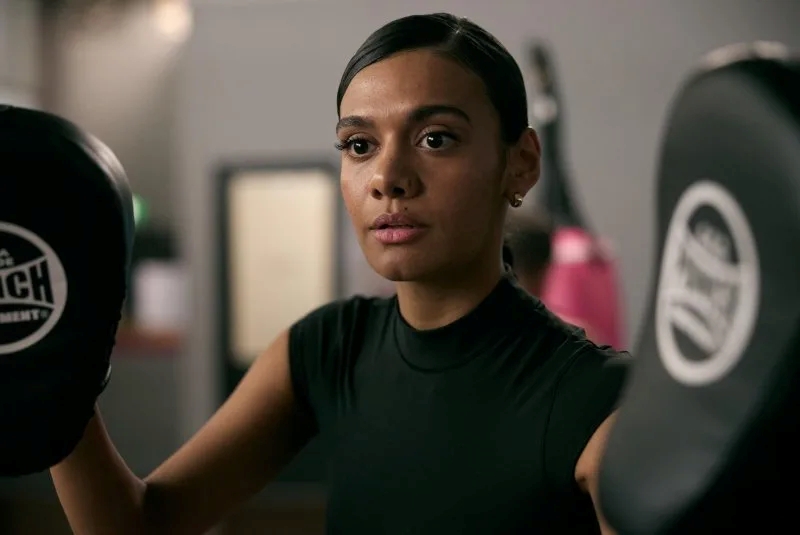
“There’s a kind of duality in that a lot of the palette is influenced by bodies and the cadavers that are in the medical school, but then those are punctuated by these dopamine pops of colour. Some of the lighting choices reflect what’s internal; kind of being exaggerated. Going for those bold colours was to capture the kind of dopamine high that she gets through eating, the desire that she has for her Alanya (Madeleine Madden). Then we were trying to have a slightly neo-noir texture in the cityscape. One of the phrases that we used in creating that world was that it was like candy and grime.”
Could the film have been made by a man?
“Who’s to say it couldn’t be made by a man? Men have eating disorders as well. But I think there is something very female about this particular story and the queer love story. It was incredibly important that there were two women exploring desire that’s both consumptive and there may be a true connection too.”
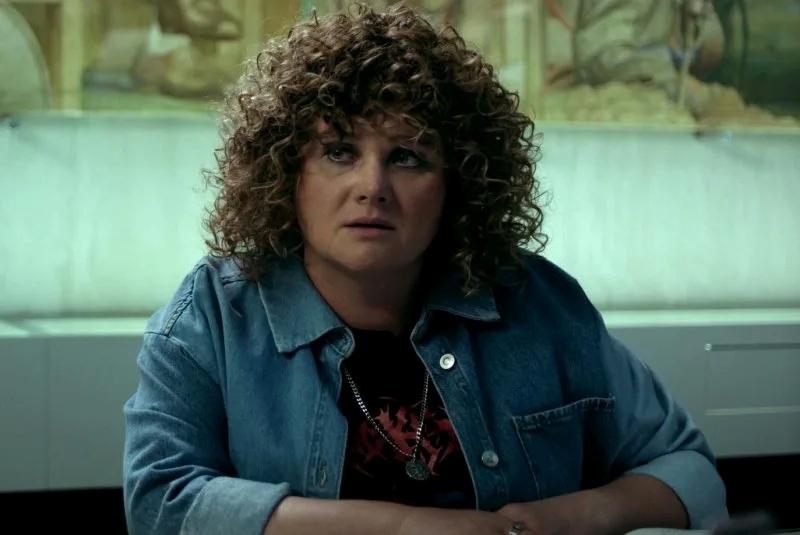
It’s good to see Danielle Macdonald as Hana’s best friend Josie. She’s speaking with an American accent. Is it meant to be in the States?
“No, it’s set in Australia in an unnamed Australian city. I purposely wanted it to be a little ambiguous and to bring a slightly heightened kind of feeling to that.”
What is your next project?
“At the moment, I’m working on an Apple series, which is another kind of psychological horror. It’s about a documentary maker who is interviewing survivors of a doomsday cult and they claim that supernatural things will happen, and these things slowly start to encroach on her life. It’s an American production and we’ll shoot in the UK.” [The series, which is called Ascension, is created by Alfonso Cuaron, who is obsessive in creating the look of his movies, not unlike James.]
How is it dealing with all the American film people? Is it easier in Australia?
“I’ve been very lucky in having this home in Australia where the government so supports our films. And I’ve been fortunate to have work on projects where we’ve always had an American component or an American partner in some way, but still have a very Aussie core team and Australian producers and crews as well. But yeah, it’s certainly different. I mean, my last film was a studio film, and there’s the indie world back in Australia. I suppose there are positives to both, but it felt really nice coming back home and making something with friends.”
 Do you live in Australia still?
“I do. I’m in Melbourne. It’s never really appealed to me to do the big LA move or the London move or anything like that. It’s been great just to travel for the work, and then come home.”
Can we go back to the very beginning, to why you wanted to become a filmmaker, and what your parents did that might have influenced you?
“I think my parents very much wanted me to not be a filmmaker, but they were also so supportive once they knew I was very serious about it. They met as exchange students when they were 16 years old. So, it was a young love that blossomed. I grew up moving around a lot and I was always drawn to stories, to storytelling. At a certain year in my schooling life, I found myself very lonely from moving around. So, as a kind of treat to myself, I would download a film at the start of the day, and then at the end I would watch it. So, film was always a means of connection for when I felt very lonely. I guess that’s what I hope that my films do to make people feel seen in their own experience.”
Have your parents seen the film?
“My dad read it. Unfortunately, he passed away as we were finishing the film. So that was really tough. He absolutely loved the script and is really the type of person who I know if he was alive… he kind of said, ‘I know what I’m going to say in the interviews already’. You know, he was very kind of extroverted in wanting to tell this story.”
Saccharine is streaming now on Stan.
