



by Stephen Vagg
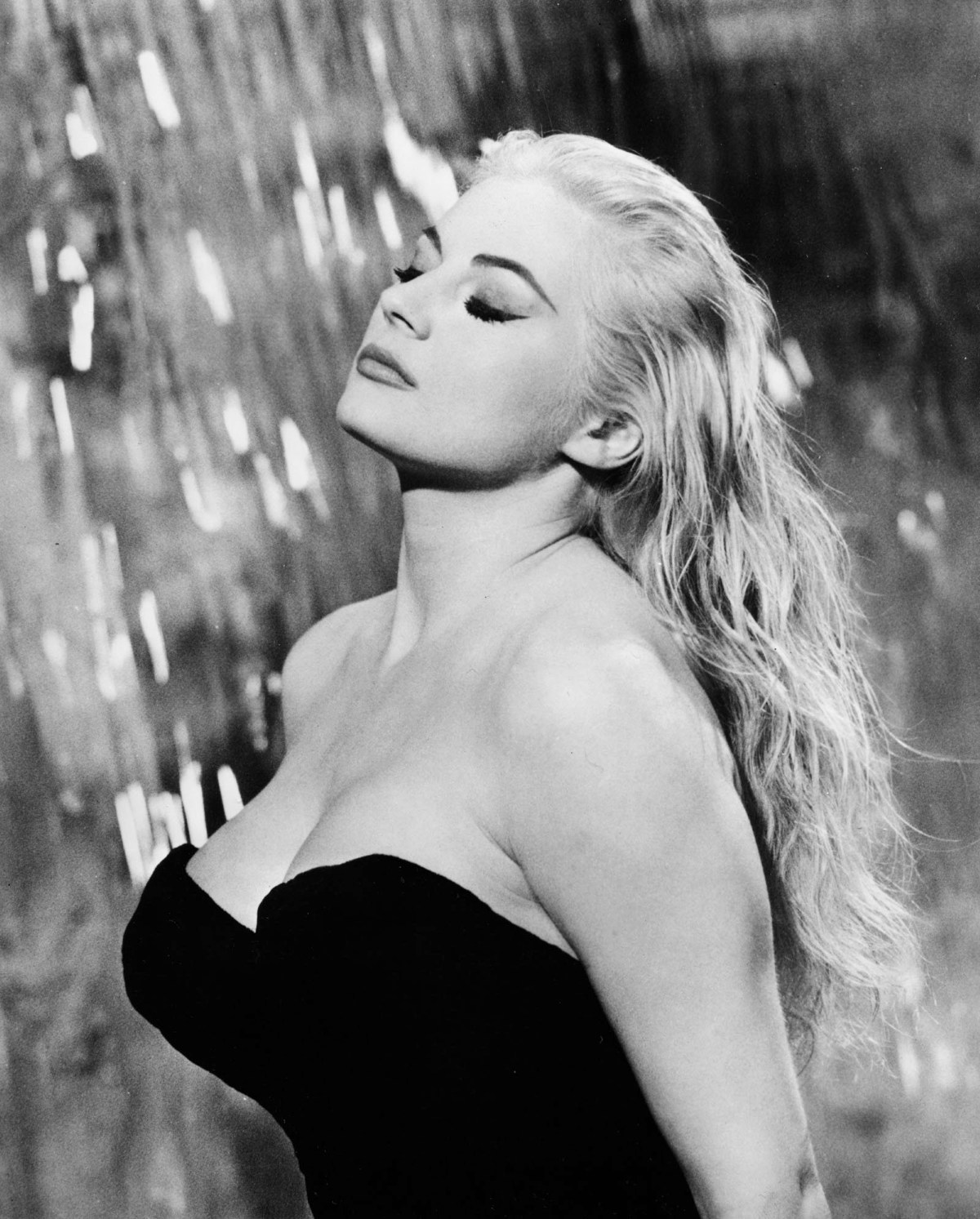
There are few more iconic images of 1960s cinema than Anita Ekberg dancing in Rome’s Trevi Fountain in Fellini’s La Dolce Vita, a scene which helped turn its subject into one of the most famous performers in the world.
Ekberg was famous for a very long time, commonly referred to as a star, and in terms of publicity and attention she was, definitely. When talking of actual movies, though, not quite… but when you dig into it, her filmography is pretty interesting.
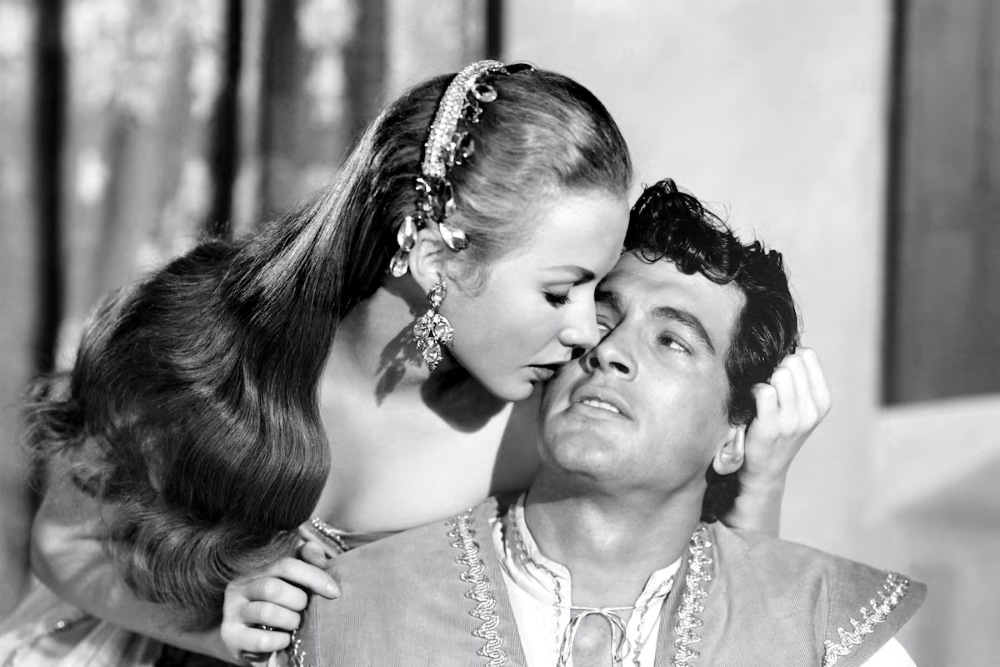
The poster girl for Italian cinema was Swedish, born in Malmo in 1931. Anita was born gorgeous and started modelling as a teenager, winning Miss Malmo, then Miss Sweden, which led to a visit to the US to compete in Miss Universe. She didn’t win but earned a contract with Universal Studios, who used Ekberg as exotically dressed window dressing (Arabian dancing girls, aliens from Venus, etc) in programmers like Abbott and Costello Go to Mars (1953) and The Golden Blade (1953). However, Universal had a lot of pretty girls under contract, Ekberg’s English wasn’t the best, or her attitude, and it wasn’t long before the studio dropped her.
Ekberg kept plugging away, doing modelling and guest starring on the odd TV show. She was meant to star as Sheena in the TV series of the same name but “didn’t turn up to filming” and was replaced by Irish McCulla. We think – though we’re not sure – the reason for Anita’s absence was millionaire tycoon/nepo baby/producer/perv Howard Hughes, who liked a well-endowed woman, was dangling a long term film contract in front of her, and she might’ve been dreaming of better things. Sheena would have been ideal for her. Not that it mattered for long: at a beauty contest, Anita Ekberg was introduced to Bob Hope who needed a last minute replacement for Marilyn Monroe to accompany him (and Bill Holden, Hedda Hopper and others) on a tour of US bases in Greenland. Ekberg got the gig, was very well received by all those horny soldiers, Hedda Hopper published the hell out of it, and the Swede started developing “heat”.
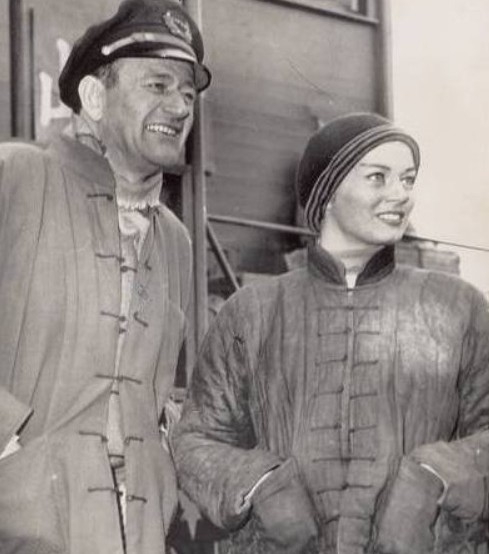 She guest starred in the first episode of the dumb TV series based on Casablanca that no one remembers, playing an Ilsa type. Hope recommended her to John Wayne, who put Ekberg under contract with his company, Batjac. Her first film for Wayne was the anti-commie actioner Blood Alley (1955), in which she played a Chinese refugee mother.
Then, director Frank Tashlin – who, like Howard Hughes, appreciated a curvy woman – used Ekberg to excellent effect in Artists and Models (1955) with Martin and Lewis.
She worked so well with Tashlin that the director cast her again with the team in Hollywood or Bust (1956) (playing herself); he also filmed her years later in the Agatha Christie adaptation The Alphabet Murders (1965), while Lewis used her in Way… Way Out (1967).
The big breaks kept coming: Ekberg was cast in a key part in War and Peace (1956), as Helene, who marries nerdy Pierre (Henry Fonda). Ekberg stepped in when original choice Arlene Dahl fell ill and the resulting movie was a global blockbuster, garnering the Swede a lot of attention; while the film’s female lead was Audrey Hepburn it was a lot easier to get Ekberg for interviews and photographs and her face and figure were everywhere. The fifties was the heyday of heavily bosomed celebrities (Marilyn Monroe, Gina Lollobrigida, Jayne Mansfield, Sabrina, etc) and the press had already been panting over Ekberg due to her photographs and private life – now she had genuine heavy credits to back up all the hype.
RKO cast Ekberg as a showgirl in Back to Eternity (1956) for director John Farrow, her first Hollywood lead role, and she was actually very good. Batjac used her in a low budget Wayne-less thriller Man in the Vault (1956), the directorial debut of Andrew McLaglen, playing a double-crossing floozy.
Then Warwick Films, the company of Albert Broccoli and Irwin Allen, used her as a sexy spy to tremendous effect in Zarak (1956), which featured a memorable belly dance. Ekberg fitted in perfectly with the Warwick action-adventure formula, all curves, sex, exoticism and dodginess – she was a role model for later James Bond girls – and Broccoli and Allen called her back for Interpol (1957) and The Man Inside (1958). She should’ve made more movies for Warwick, but Allen then started giving female leads to his mistress, Anne Aubrey, and the company eventually went under.
As mentioned earlier, Ekberg’s love life was full of colour, and she had a tabloid-friendly marriage to British actor Anthony Steel aka the Wooden Dish. They were constantly in the papers, fighting and making up, being chased by the paparazzi – Steel would hit her – and they even made a film together: Valerie (1957), a surprisingly engrossing Western/noir/drama, co-starring Sterling Hayden. It was the first of three films that Ekberg appeared in directed by Gerd Oswald – the others were Paris Holiday (1958), a comedy with Bob Hope and Fernandel, and Screaming Mimi (1958), a film noir where she’s stalked.
None of these three films were particularly popular at the box office, at least not in North America; neither had Back to Eternity or Man in the Vault, and it was clear that while Ekberg was famous, she wasn’t a particularly strong draw. However, her beauty, charisma and knack for getting publicity were still worth something and she received an offer to work in Italy, where the industry was booming, driven by the popularity of peplums such as Hercules.
Ekberg fitted right in, playing Zenobia in Sheba and the Gladiator (1959) aka Sign of the Gladiator, which became a solid hit internationally. Then Fellini cast her in La Dolce Vita (1960) and Anita Ekberg was a media sensation all over again.
Ekberg’s European career took off: Last Train to Shanghai (1960), The Call Girl Business (1960), Behind Closed Doors (1961), The Mongols (1961) with Jack Palance, and Boccaccio ’70 (1962) (an anthology film; Fellini directed her segment). Broccoli used her with Bob Hope in the British comedy Call Me Bwana (1963), a poster for which appears in the second Bond film, From Russia with Love.
Ekberg’s second husband was a Bond actor – American Rik Van Nutter who played Felix Leiter in Thunderball (1964). Prior to Van Nutter, she’d had a long, turbulent, well-publicised fling with a one time candidate for Bond, Australia’s own Rod Taylor; he was one of several famous notches on her bed post over the years (others included Robert Wagner and Yul Brynner).
Ekberg went back to the US to make 4 for Texas (1963) with Frank Sinatra and Dean Martin, but was now firmly a European based star: Who Wants to Sleep (1965), The Alphabet Murders (1965), How I Learned to Love Women (1966), Pardon Are You For or Against (1966), The Cobra (1967) with Dana Andrews, The Glass Sphinx (1967) with Robert Taylor, Woman Times Seven (1967) with Michael Caine, Fangs of the Living Dead (1969), Death Knocks Twice (1969), Malenka (1969), The Divorce (1970), Fellini’s The Clowns (1970). Later movies included The French Sex Murders (1972), Killer Nun (1979), Gold of the Amazon Women (1979), S*H*E* (1980), and Fellini’s Intervista (1987). Her last years were not always easy, financially or health wise. She died in 2015.
The most surprising thing about researching this piece was that Anita Ekberg’s film career was very respectable. Yes, she was more famous for her appearance and love life, but look at the filmmakers she worked with, at least in her first decade or so: Frank Tashlin, King Vidor, John Farrow, Fellini, Robert Aldrich, Vittorio De Sica, Albert Broccoli, Terence Young. That’s pretty good. And what’s more, many of those asked her back (Tashlin, Fellini, Gerd Oswald, Broccoli).
Ekberg was treated as a joke for her entire career – most contemporary writing about her went along the lines of “hahahaha she’s got big breasts and is from Sweden hahaha.” And to be fair, she did do a lot of dumb things and was perhaps a little too addicted to publicity and drama in her personal life. But looking back, it’s not too hard to cobble together a decent Anita Ekberg top ten:
War and Peace
La Dolce Vita
Boccacio 70.
Zarak
Artists and Models
Hollywood or Bust
Back from Eternity
4 for Texas
Sign of the Gladiator
Woman Times Seven
That’s not too shabby and neither was the film career of Anita Ekberg.
