



by Stephen Vagg
Australia’s cinematic output during World War Two was minimal to the point of extinction – there was a brief spike at the very beginning prompted by the New South Wales government guaranteeing the overdraft of a few films, but after that, the pickings were fairly grim. Over a period of around five years, we made a bunch of propaganda shorts and some low-budget pictures but only one decently-budgeted feature, The Rats of Tobruk.
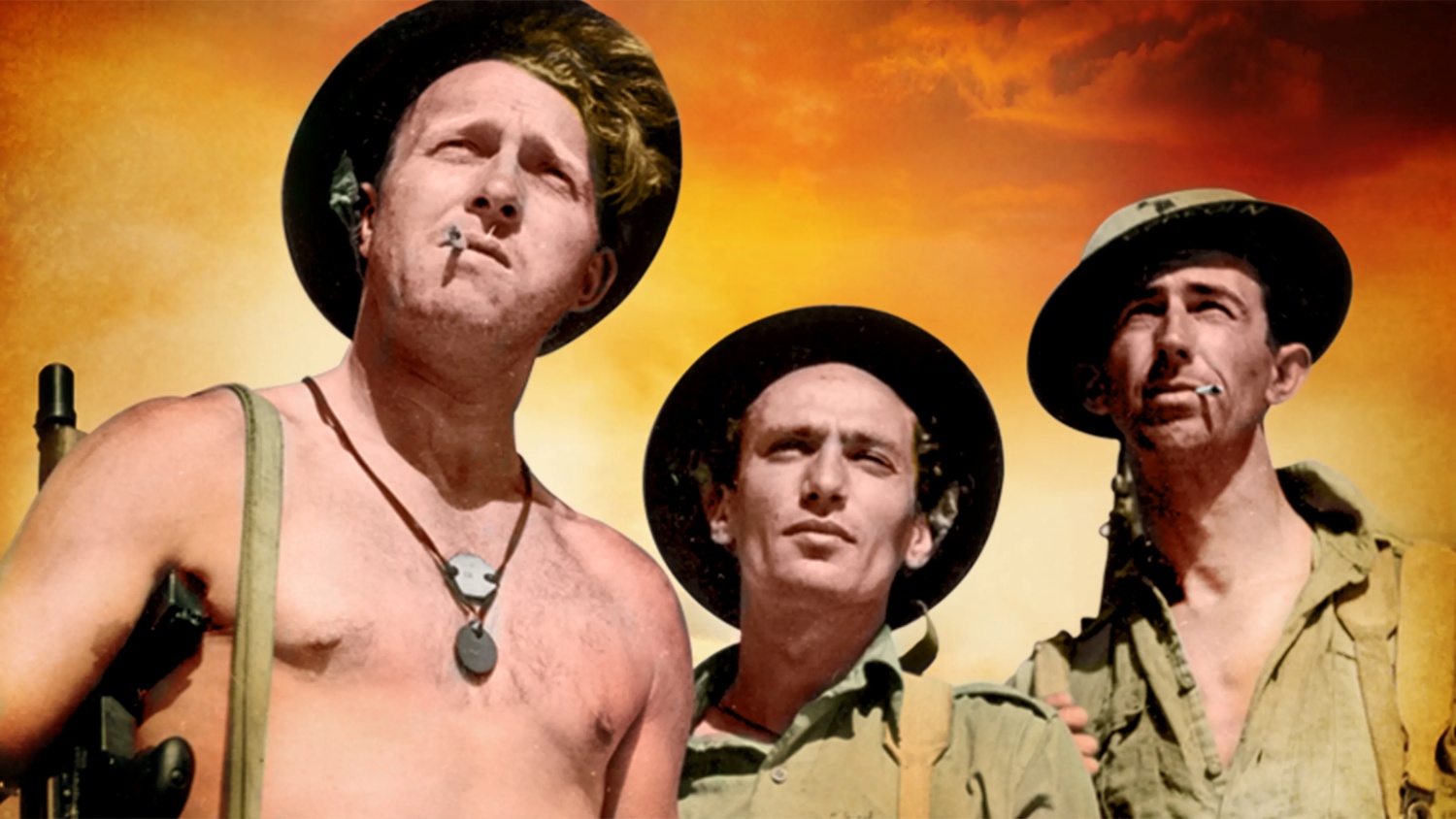
This was Charles and Elsa Chauvel’s follow-up to their 1940 hit Forty Thousand Horsemen, and reprised many of that film’s elements, most notably being about the adventures of three Australian soldiers who take part in a real-life battle, and featuring the same stars, Grant Taylor and Chips Rafferty (the role of “third friend” was played here by Peter Finch, replacing Pat Twohill).
The two movies are very different tonally, though – Horsemen was a swashbuckling adventure with spies, horses and French girls masquerading as boys; Rats is more serious and downbeat, as befitting a movie made by a country that had been at war for five years, and when the events displayed in the movie were far more recent, and after the director had made a whole bunch of serious propaganda shorts. Oh, and where the script was not co-written by adventure novelist EV Timms – he’d helped the Chauvels write Uncivilised and Horsemen but was not available for The Rats of Tobruk, busy doing guard duty at the Cowra POW camp (indeed, he was on duty the night the Japanese prisoners broke out. (Another contributor on the script for Horsemen who didn’t return for Tobruk was script editor Herbert Howard.)
While Forty Thousand Horsemen began with the jaunty tones of ‘Waltzing Matilda’, The Rats of Tobruk starts soberly with a narrator introducing two Aussie drovers – Taylor and Rafferty – and their English mate Peter Finch, who is in Australia for life experience. Unlike the trio in Horsemen, who were shown having fun, the lead three in Rats are very serious. Grant Taylor’s character is interesting – a shiftless womaniser who can’t settle down – but Chauvel doesn’t dramatise the womanising or shiftlessness, though Taylor does have a romance with a squatter’s daughter (nicely played by newcomer Pauline Garrick).
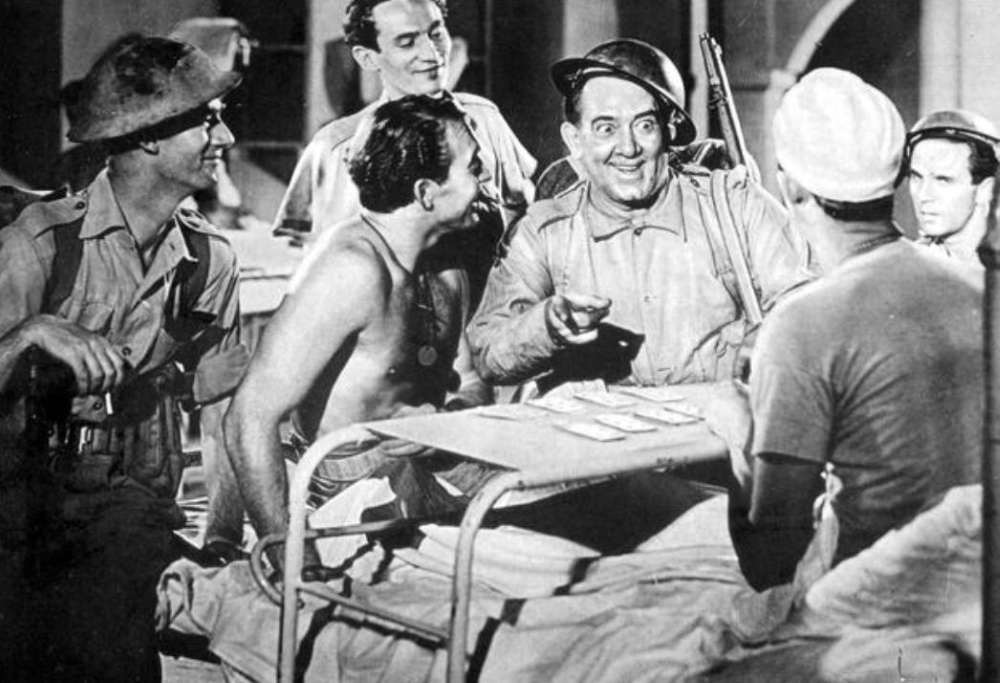
Then war is declared, and our three heroes enlist and wind up in Tobruk where they spend most of their time in trenches and sand dunes and… that’s about it. Horsemen’s story was a bit silly but at least it was a story; Rats doesn’t really have one, apart from Finch’s romance with a nurse (Mary Gay). The movie is more a series of repetitive scenes and moments rather than a cohesive narrative: fight-injury-recover-fight-injury-recover, etc. The filmmakers could have leant into the romance between Finch and Gay – made it a love triangle with Taylor, say – but they don’t. In fact, the Mary Gary character could have been removed from the film without it affecting the story at all – so too could the Pauline Garrick part. This is in sharp contrast to Horsemen, where the female character played by Betty Bryant is crucial to the story.
Chauvel’s previous movies all had healthy dollops of melodrama, but that isn’t the case here – possibly this was due to the absence of Timms; it might have also been to get army cooperation. Incidentally, the original treatment is here).
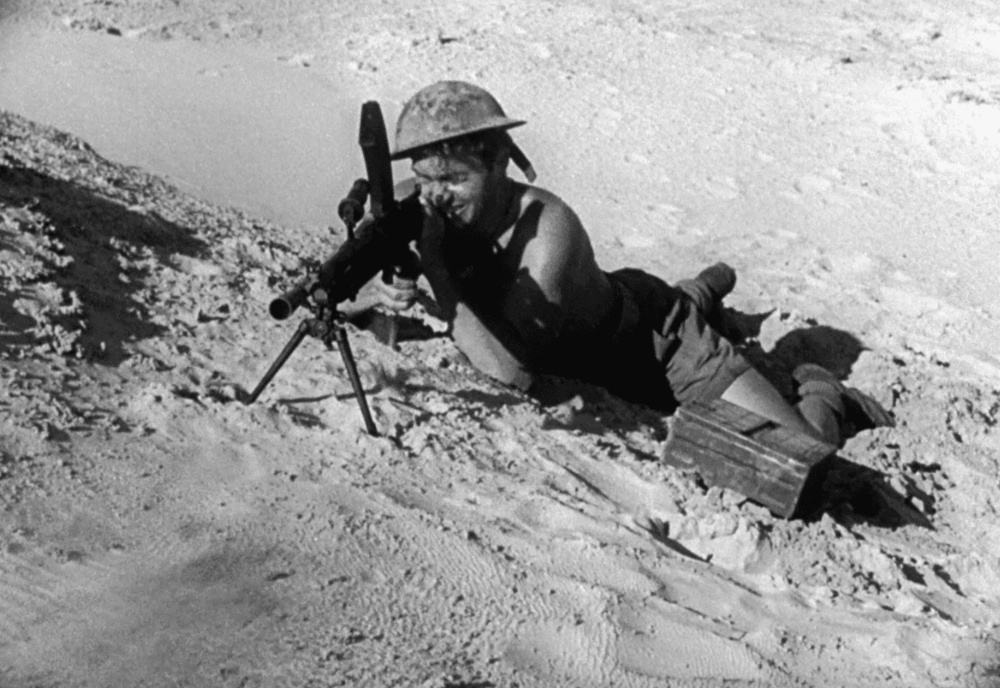
Furthermore, the siege of Tobruk, while a tremendous feat of arms, is difficult to visually dramatise on film because the fighting involved so much lying down on the ground and shooting at tanks and night fighting and doesn’t have an obvious climax. These were also problems in the 1953 Hollywood version of the story, The Desert Rats (which also starred Chips Rafferty).
Chauvel inserts comic interludes with George Wallace and Joe Valli, but they are poorly integrated into the final movie. Valli is fine performance-wise but Wallace seems very old, only a few years after his terrific turn in Let George Do It; we wonder if it was age or just his presentation (the Chauvels were never that great with comedy). Also clunky is the climactic sequence – added at the last minute to bring the film “up to date” where Grant Taylor and Chips Rafferty go fight in New Guinea… although that sequence, like the entire movie, is beautifully shot.
Grant Taylor is confident and masculine as ever, slightly more battered than he was in Horsemen. Chips Rafferty does his Chips Rafferty thing and Peter Finch is very effective and moving. (All three men were serving in the forces at the time, incidentally, and had to take leave to make the movie). For all the film’s faults, it is an invaluable time capsule of one of this country’s greatest feats of arms. Chauvel aimed for authenticity and a lot of it looks like the real McCoy – there is documentary footage, plenty of bunking down in sand dunes and driving around in tanks. The visual look, the brusque attitudes of the officers towards the men, the seriousness of the treatment; even the poignant moment where Wallace tells the three leads “well, I had a go didn’t I?” tell us much about Australia at the time. So too does the fight at the end of the movie between Grant Taylor and the Japanese soldier – it’s a vicious brawl and ends with Taylor shoving his opponent’s head under water and holding it there until the soldier drowns. It’s brutal, tough, and uncompromisingly depicted – a real insight into what your granddad (or great grandad) got up to in New Guinea’s Owen Stanley Range back in the day.
The Rats of Tobruk is a bit of a mess but it should still be watched if you’re interested in Australian cinema or Australian military history.
You can see the film on Brollie.
The author would like to thank Graham Shirley and the National Film and Sound Archive for their assistance with this piece. Unless otherwise specified, all opinions are the author’s.
