


By Anthony James
When filmmaker, writer and movie critic Richard Kuipers was still a teenager growing up in the far southern suburbs of Sydney in the Sutherland Shire, there was one Australian feature film of the ‘70s that had grown into legend: Sandy Harbutt’s Stone, the movie that partly inspired George Miller’s Mad Max. “It would turn up on television in a modified version with the ending cut out, and the next day everyone in the playground would be talking about it,” he remembers. Originally released in 1974, Stone was still playing at Kuipers’ local drive-in at Caringbah in the ‘80s, which was where he first saw it uncut for the first time…sort of. “It was R-rated, and I was still too young to see it, so we’d watch it through the wire chain link fence.”
A tense thriller in which the eponymous undercover cop hero infiltrates a bikie gang to discover just why they’re being mysteriously bumped off, Stone is part routine cop story, and part documentary about a sub-culture roundly condemned by “straight” society. But for many critics, it was a bummer. Condemned for its violence, its language, its admittedly poor acting, and psychedelic detours, many critics saw it as a warmed-up version of US B-grade biker movies. But for its legion of fans – a large number of whom had experienced the bikie lifestyle first hand – Stone was an authentic screen version of their culture. This was because Sandy Harbutt had got into “biking” to experience it first hand, and came away full of respect for its denizens’ “code of honour”.
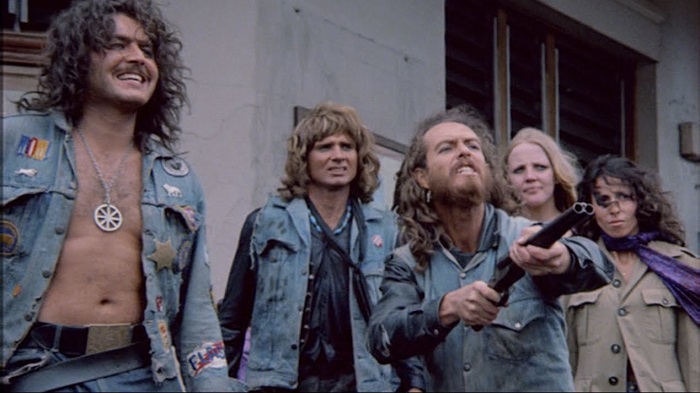
Decades later, it’s the hit movie that won’t go away. “It’s one of the half dozen Australian films that genuinely connects with a large working class male audience,” says Kuipers, noting that the movie’s bikie anti-heroes, The Gravediggers, are alienated Vietnam War vets. “Stone came out at a very turbulent time – there was still a lot of anger about the war in South-East Asia,” he says. The film also name-checks growing social and cultural concerns of the decade: police corruption and brutality, liberalisation of drugs and sexual mores, and the environment [one scene features a stoned bikie witnessing a political assassination at a rally in favour of environmental conservation].
Still, the movie’s deftly executed action is off-set by often maudlin moralising and fashionable filmmaking techniques of the time – fish-eye lensing and psychedelic gels a la Easy Rider. “For all its flaws, it’s the real deal,” argues Kuipers. “It’s a bloody good first film – Sandy Harbutt was 32 and he took on a massive undertaking. There are stunts, bike and car action, and real bikies on set.” To a ‘70s Australian audience only used to homegrown product consisting of bawdy comedies like The Adventures Of Barry McKenzie and Alvin Purple, Stone was a welcome blast of action filmmaking.
Kuipers finally saw Stone with the dialogue and its notoriously bloody ending for the first time in the mid-80s on video. In the ‘90s, while he was producing the SBS Movie Show, Kuipers commemorated the 20th anniversary of Stone with a segment that brought together the filmmakers and some of the main cast, including director Harbutt and actors Ken Shorter, Hugh Keays-Byrne, Roger Ward and Vincent Gill. Five years later, Kuipers was surprised to receive a call from Harbutt and the film’s co-producer David Hannay. “They asked me to shoot the 25th anniversary of the film,” Kuipers explains. Because they’d liked what he’d done on The Movie Show, the filmmakers felt that they could trust him. They told him that the celebrations would include a motorcycle run up the Newcastle freeway with 34,000 bikers – the hard core of Stone’s massive fan cult – followed by a twenty-four-hour party. “I thought that the resulting film would end up being distributed on mail order or something,” Kuipers laughs.
Margaret Pomeranz (The Movie Show’s executive producer as well as host), supported the project, and Kuipers was able to stitch together a deal between SBS and Harbutt’s production company. Acclaimed as one of the most original and best “making-of” films ever made, Stone Forever investigates not only the behind-the-scenes production stories of the movie itself, but also the lifestyle of its fan base. It went on to screen at the Melbourne and Sydney Film Festivals to rave reviews, but had not been widely seen since. Completed over six months in 1999, the doco – which finally saw a release on DVD as part of a Stone double disc set – was shot on a tiny budget in an atmosphere that Kuipers says came close to the maverick spirit of Stone’s actual production.
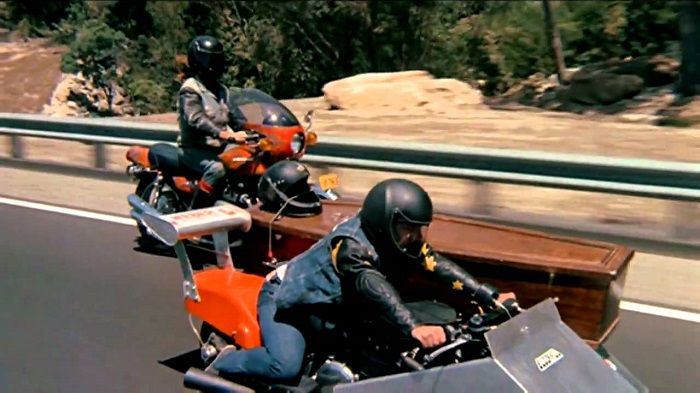
“I had no one looking over my shoulder, no one told me what to do, and I got complete access to everyone,” he says. Using the spectacular 1998 bike run as the bookends for the film, Kuipers tapped a huge archive of stills and behind-the-scenes footage from the set. Much of this stuff concerned the film’s brilliant stunt work. In one scene, a member of the gang is ambushed and rides his motorcycle off a 90-metre cliff straight into the Pacific. This was not faked in any way. This eye-scolding “stunt gag” was achieved by stunt leader Peter Armstrong, who rode a motorcycle off notorious Sydney suicide spot The Gap, with the resulting fall knocking him unconscious.
“I don’t think you’d be allowed to do that today,” says Kuipers. Perhaps best of all, Kuipers conjured hair-raising admissions from the cast and crew recalling the more bizarre details of Stone’s making. In one instance, Harbutt and Hannay convinced the local Hell’s Angels to stage a brawl with the film’s fictional biker gang at a notorious bikie hang-out. Legend has it that the situation spun out of control, and that no punches were actually pulled. “Let’s give Sandy his due as a director,” says Kuipers. “I don’t think Sandy needled people to get them to fight, but he knew what would look good on film. And it’s true that Stone is probably the only Australian film to pay out extras by offering thirty cases of beer!” Kuipers said that the Angels also received some dope in addition to the grog, adding that they were quite happy with the arrangement.
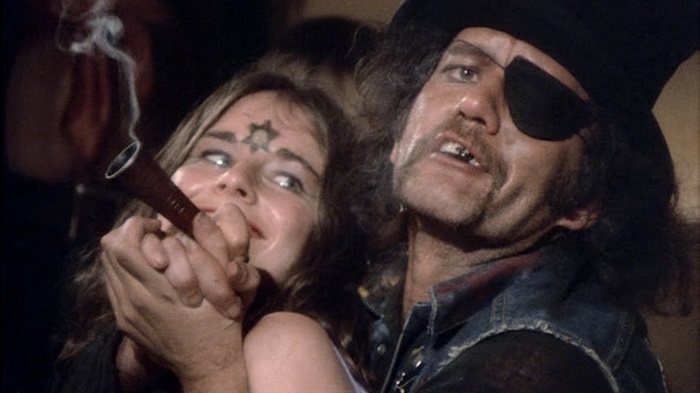
“That’s what I love about this story,” Kuipers says. “It comes from the wild outlaw days of Australian filmmaking. Even if you were government funded [which Stone was in part], bureaucrats were a lot less concerned with what they had to talk about at cocktail parties and what they could justify before senate committees back then.” Kuipers says that far from being embarrassed or coy about their participation in the film, the key players were candid. “It’s because we were talking about a very happy time in their lives.”
Kuipers also gets inside the fact that Harbutt has never made another film since Stone, even if on a dollar-for-dollar basis it remains one of the most successful local films ever made. “On a cost-to-profit equation, Stone is number six of the all-time successful Australian films,” Kuipers says. So what happened to Harbutt’s career? “Sandy was considered a wild card, and on that basis he could not be trusted.” Harbutt, Kuipers says, had set himself up as an auteur on the film – he not only co-produced, co-wrote and directed, but also played one of the key roles himself. Still, Harbutt had only been seen in small TV parts and had had a career in directing commercials, so his confidence looked to many like arrogance.
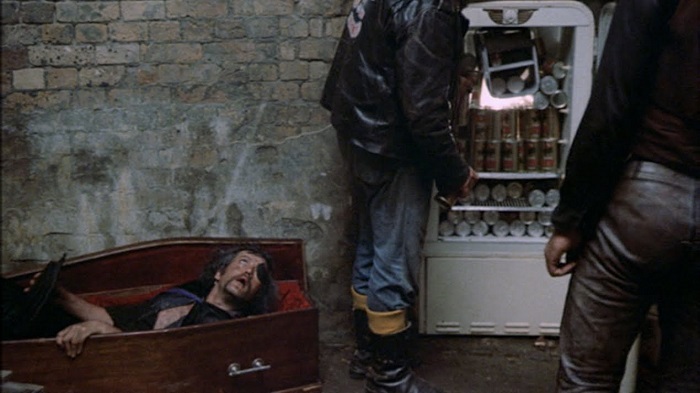
In the then emerging Australian feature film industry, the power brokers and financiers desired caution, and not necessarily showmanship. Kuipers agrees that the film’s unorthodox making and his willingness to deal with “outlaw” elements may have condemned Harbutt as a “ratbag” too. For nine years, Harbutt tried to make a very expensive film set in Papua New Guinea but had no luck. “But Sandy is a big winner too,” says Kuipers. “Who else can say that they made one film that everyone knows and he still draws an income from it! He bought the negative off the financiers and he has a line of merchandise that provides returns for him.” Kuipers says that if it weren’t for the fact that distributors demolished most of the country’s drive-ins, Stone would still be playing out there, somewhere.
The film also, back in 2010, looked like it was going to cop the remake treatment, courtesy of filmmaker, Richard Cartwright, who intended to recharge the subject for the new millennium by shooting it in 3D. “I’m actually using the word recreation or reinvention,” he enthused to FilmInk at the time. “There are some pieces of art that you just don’t touch. I’ll refer to Mr. Quentin Tarantino’s line: ‘Stone is just too good to remake.’ This will be more of an homage.”
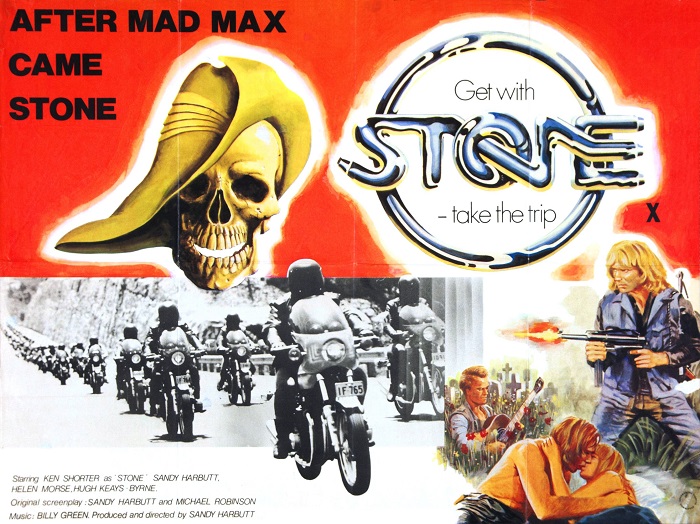
It’s no secret that Quentin Tarantino is a big fan of Stone. Cartwright and QT shared their enthusiasm at The Cannes Film Festival, where Cartwright was lucky enough to gain an audience with the director. “His exact words to me were: ‘Sandy Harbutt is a visionary!’” Cartwright meanwhile gave Tarantino an original 35mm print from Harbutt’s own collection. “Tarantino’s face was like a five-year-old kid in a candy store! The film was in an authentic 1974 can, slightly rusted, with Goulburn Theatre and Darwin Cinema stamps all over it.” There was even a possibility that Tarantino would play a role in proceedings.
Sandy Harbutt also gave the project his blessing. “Sandy has not imposed his point of view at any time,” Cartwright told FilmInk. “He’s made wonderful and helpful suggestions. Sandy said to me, ‘Richard, I’ve made my film – now go and make your film.’ That was a wonderful thing to say, and I couldn’t be more humble. It’s now my goal to do justice to Sandy’s great piece of iconic Australian cinema.”
Sadly, Richard Cartwright couldn’t raise the finance for his intended remake, and Sandy Harbutt’s Stone somewhat appropriately remains a true rebel stand-alone…
The Stone double disc set (including the Stone Forever documentary) is available now on DVD.

Stone “failed” and Mad Max succeeded. Stone was badly (or stage) acted and sometimes badly scripted. Ken Shorter was a _joke_ as a “hero”….no appeal and a bad actor.
Sandy Harbutt obviously loved bikes (scene where you place your gloves on the console, not the tank). He loved the rebel bike culture.
Troubles were:
– low budget
– Harbutt ran it all and acted… recipe for failure, or great success…many far greater established film people have won or failed trying this.
– the bikers were portrayed as basically a bunch of rather cultured larrikins: a sort of footy side, , with their boss calling for a democratic vote on whether to allow a cop to ride with them… sorry ..not real.
– there was too much of an agenda in Stone;: the bikie culture as being all about riding (hmmm)..
Mad Max was just a “non-CGI” CGI film…..cartoon…crazy…OTT…no agenda…total OTT.
– It had bad acting and bad script and silly plots
BUT
– it had Mel Gibson ( who was dreamy to all man-attracted genders, and who could act)
– I know I said this…but it had no agenda…except bad and blood
– it was not written, directed and acted by the same guy
-the other way usually happens when ego or AGENDA is the motive.
– if it pays off, it’s genius….if not, failure.
You’re a hard man to please. I agree it wasn’t some of the best acting in the world but there were moments of good acting. I remember most movies at that period were made with lets say “Over acted” . But I think the basis of the culture being portrayed was delivered.
I grew up around bikers & bikies.. So I knew alot of the culture. Bikers were about getting out on weekends and meeting up with friends and going for a ride somewhere and Bikies were about drugs, mateship, drinking, fights, territory, antidisestablishment, police hatred and riding around “Things” sold to make $$, Going to the club house/pub to release steam and to sort out any issues with other clubs that were in their territory or had “messed” with one of their members and their “Rules/Code” aka their bible of what is and what isn’t.
I would agree that the “Grave Diggers” is portrayed as bikie group for the movie. But realistically it is more a half and half MC & SC with a touch of flower power, which was never the case in most 1%’rs bikie groups. You only needs to look at the Bandidos and Comancheros. There is democracy but there would NEVER be allow a pig into their group at act as one of them. This is would of been seen as a “Dog act” and blemish to the name of the MC. They would have some police that they would work with as informants or pay off to see a blind eye on some issues. But they would never have a policeman/policewoman in their ranks dressed as one of them. Other clubs would see this as weakness, betrayal to the culture and would incur multiple clubs retribution whether it be a lost in drug distribution networks, alliances, truces or in all out wars.
Stone is probably a more of a portrayal of both MC & SC .. the best of both worlds being shown to the public. An easier pill for them to swallow for that time. Shows like under belly glimpse into the real side of MC clubs and their workings. But I think it also shows a common ground in regards to the motorcycle culture in Australia and that the people riding motorcycles were passionate about riding and their bikes. This culture is larrikin like, it is about riding together as one, it is about what you ride and the feeling of freedom and many other reasons.
For it’s time, where the Australian culture was just opening up from its very British conservative ways it showed them a glimpse into a world that was feared and hiden is secrecy from their “Safe” mondain life.
Years since this movie was made many people have some up to Harbutt and told him that they ride today because of this movie. The movie has come to be known as a cult classic. You don’t see many bike movies.. and the ones that have followed have been less than cult worthy, except for home mode movies like “Ghost rider” (No not the Nicolas Cage movie) where 3 men travel across europe on a R1, CBR and a Hayabusa. From a world of cotton wool clad people this movie opened their eyes to an alternative lifestyle and maybe they felt a bond with its focus on the bikes where there was no movies for that culture except for the movie “Easy Rider”..
All I hope is that you look pass the negatives and to see why it became a cult classic and why it is such a gem and yes even with the over acted scenes. it’s a shame that there isn’t more movies like it.
Thank you for your time Blind Freddie..
“it had Mel Gibson ( who was dreamy to all man-attracted genders,”
Well, since there’s only 2 genders… I mean.. ya know… SCIENCE.
I’m a nobody but I road my Honda with the pack during the filming us blokes from the hawksbury we met up at Hornsby ..i had the privilege of meeting up with harbutt at Bathurst 2ooo return to the mountain …my biking way of life has not changed
I’ve got a copy on DVD I’ve had for over 25 yrs…Was living in Sydney when it was filmed and they were calling for extras for the funeral scene!
Rode for when you’re riding, not road.
They deleted 20 minutes of the film so it could be shown at the Cannes Film Festival. You can not get a dvd now that has these scenes in it. They talk about this in Stone Forever. The film to my mind is ruined by cutting out these scenes. I would pay a lot of money for a copy of the original film. Me and my Aussie biker mates owe a lot to the movie Stone.
Absolutely spot on Bob, I remember the cut scenes well & feel the same. In Particular the scene at Godowns grave site where Hooks passed around a pair of nickers for all to the smell “pinched these off a sheila in Dubbo” . I watch Stone at least one a year and always comment about the deleted scenes.
90 meter cliff ?? .Wikipedia says 80 ft. So did another.